Guide
How to Document Pre-Tenancy Damage Right
Learn how to document pre-tenancy damage in a shared rental, protect deposits, set expectations, and prevent roommate disputes before move-in every time.
Irving Barajas · November 24, 2026
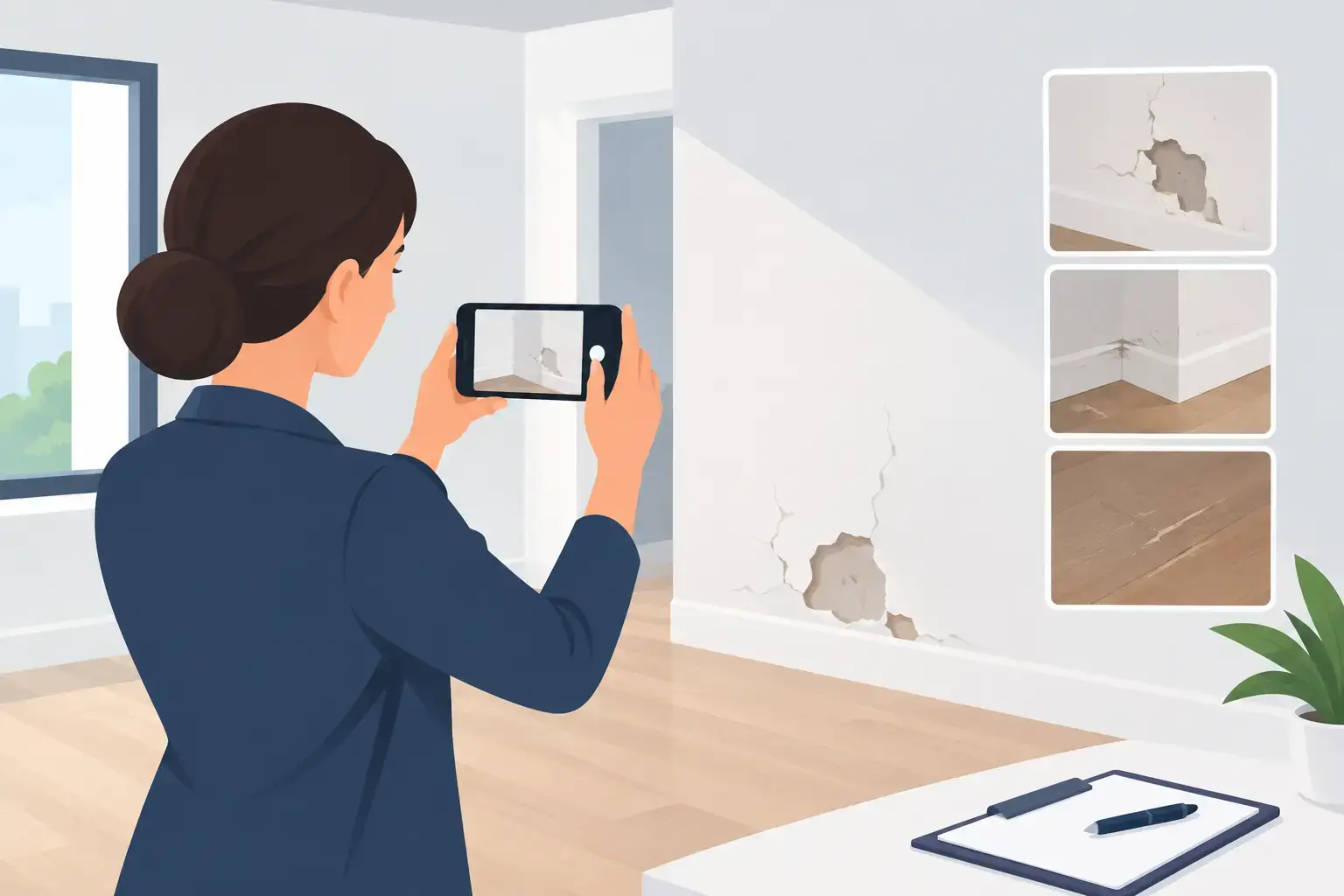
A new roommate walks in, notices a scuff on the bedroom wall, and says, “That was already there.” Six months later, the same scuff becomes a deposit dispute because nobody can find the move-in photos. That is exactly why you need to document pre-tenancy damage before keys change hands.
For a rent-by-room property, this process needs to be more detailed than a quick walkthrough of the house. You are not handing over one unit to one household. You may be moving several unrelated adults into separate bedrooms while everyone shares the kitchen, bathrooms, living room, hallways, and appliances. Without clear records, damage can become everyone’s problem - or no one’s.
A solid pre-tenancy inspection protects your property, gives roommates a fair starting point, and prevents the “I thought someone else did it” cycle before it starts.
Why shared houses need better damage documentation
In a conventional rental, a landlord can often compare the unit’s condition at move-in and move-out with one tenant or family. In a shared house, occupancy changes more often. One roommate may leave while four others remain. A new resident may move into a bedroom that has already had multiple occupants that year.
That changes the question from “What happened to the house?” to “What was the condition of this specific room and shared space when this person moved in?”
The answer should not live in your memory, a vague checklist, or an old group-chat thread. It should be visible, dated, and easy to retrieve. Otherwise, you can end up absorbing the cost of damage that should have been chargeable, or unfairly asking a roommate to pay for an issue they did not cause.
Good documentation also changes the tone of the move-in process. It tells roommates that you run an organized house, that existing issues will be acknowledged, and that property expectations apply fairly to everyone. That clarity is much more useful than trying to reconstruct events after a security deposit is on the line.
How to document pre-tenancy damage before move-in
Start the inspection after cleaning and maintenance are complete but before the incoming roommate has moved belongings into the space. An empty room is easier to photograph, easier to inspect, and harder to dispute.
Inspect the bedroom as its own rental space
For rent-by-room operators, the bedroom is usually the most important area to document. Photograph the full room from multiple corners first. Then capture close-ups of anything that could later be confused with new damage.
Look at walls, ceilings, flooring, baseboards, windows, window screens, blinds, doors, locks, closet doors, shelving, outlets, light fixtures, smoke detectors, vents, and any furniture you provide. If the room is furnished, document the condition of the mattress, frame, desk, chair, dresser, lamps, and any other items separately.
Use notes that describe the issue plainly. “Two-inch paint chip beside closet door” is better than “wall damage.” Include the location and, when useful, the size. If a bedroom door has a scratch near the handle, take one photo that shows the whole door and one close-up that makes the scratch clear.
Do not try to make minor wear disappear from the record. Small nail holes, light scuffs, faded paint, and ordinary wear may not be chargeable damage later, depending on your state and the circumstances. Still, documenting them establishes an honest baseline.
Treat common areas as shared responsibility zones
The kitchen and bathrooms cause a disproportionate number of disagreements in shared homes. A roommate may be responsible for damage in their bedroom, but a cracked refrigerator drawer, stained countertop, broken cabinet hinge, or damaged shower fixture can be harder to assign.
Document the condition of each shared area before a new resident arrives. Pay special attention to appliances, countertops, cabinet faces, sinks, faucets, tubs, showers, toilets, mirrors, flooring, and walls. Open appliances and cabinets when needed. A photo of a closed refrigerator does not show whether the shelves and drawers are intact.
For high-turnover homes, it can help to maintain a property-level condition record for common areas, then have each incoming roommate acknowledge it at move-in. This does not automatically prove who caused future damage, but it creates a clear record of the home’s starting condition at that point in time.
Use photos, video, and a written report together
Photos are the strongest visual record, but photos alone can become a messy camera roll. Pair them with a written inspection report that organizes each item by room and condition.
A short walkthrough video can add useful context, especially for floors, walls, and appliances. Move slowly, narrate the room and visible issues, and avoid relying on video as your only evidence. It is harder to search and reference than an organized checklist with labeled photos.
Your report should identify the property, bedroom or assigned room, inspection date, and the roommate’s move-in date. For each issue, include the location, a brief description, and supporting images. If a photo has a timestamp, keep the original file rather than only sending a compressed version by text.
Consistency matters more than fancy equipment. Your phone is enough if you use the same process every time.
Get roommate acknowledgment without making move-in painful
A move-in inspection should be a shared record, not a surprise document sent after the fact. Give the roommate a chance to review the bedroom and common-area condition report shortly before or on move-in day.
Ask them to confirm that the report reflects the condition they observed and to submit any missed items within a reasonable window, such as 48 to 72 hours. This protects both sides. A roommate may notice a sticky window lock or a small floor stain you missed, while you avoid hearing about it months later when the details are impossible to verify.
Be clear about the difference between reporting existing issues and requesting new upgrades. A roommate can document a scratched dresser without turning the move-in inspection into a wish list for a replacement dresser. Keep the process factual, but make it easy to report maintenance concerns that affect safety, security, or habitability.
Digital acknowledgment is usually more practical than paper forms, particularly when you manage multiple houses. With Cohabi, landlords can keep move-in inspections and property-condition documentation in the same place as household communication and other roommate operations. The point is not adding another system. It is making sure the record is there when you need it.
Keep the record usable after the move-in date
Documentation only helps if you can find it. Save inspection records in a consistent folder or platform structure: property, room, roommate, and move-in date. Use clear file names rather than “IMG_4837.” For example: “123-Main-Room-3-closet-door-scratch-move-in.”
Keep the signed or acknowledged report with the lease and security-deposit records. Back up original photos and videos somewhere you control. If your phone is lost or a staff member leaves, the inspection history should not disappear with it.
Update the record whenever there is a room transfer, a new roommate, a significant maintenance repair, or a documented damage event. If you replace a damaged countertop or repaint a bedroom, take after-photos too. Your next inspection should reflect the property’s actual condition, not an outdated issue from two tenants ago.
Avoid the mistakes that create deposit disputes
The biggest mistake is doing an inspection inconsistently. A detailed report for one roommate and a verbal walkthrough for another invites conflict. Build a repeatable checklist and use it every time, even when you are busy filling a vacancy.
Avoid vague language, blurry photos, and records created days after move-in. Do not assume a roommate has seen the condition of a common area just because they walked through it during a showing. And do not automatically label every mark as tenant damage. Normal wear and tear is treated differently from negligent or excessive damage, and security-deposit rules vary by state.
When damage does occur, document it promptly, communicate the issue directly, and follow your lease terms and applicable state law before making any charge. A clean move-in record gives you a better foundation, but it is not a substitute for fair, lawful deposit handling.
The goal is not to turn every move-in into a courtroom exhibit. It is to make the facts easy to see while the facts are still fresh. When every roommate starts with a clear condition record, you spend less time sorting through old photos and more time running a house that works.