Guide
Inspection Apps for Rent-by-Room Landlords
Inspection apps help rent-by-room landlords document every room, prevent deposit disputes, and make move-ins and move-outs easier with less work overall.
Irving Barajas · September 29, 2026
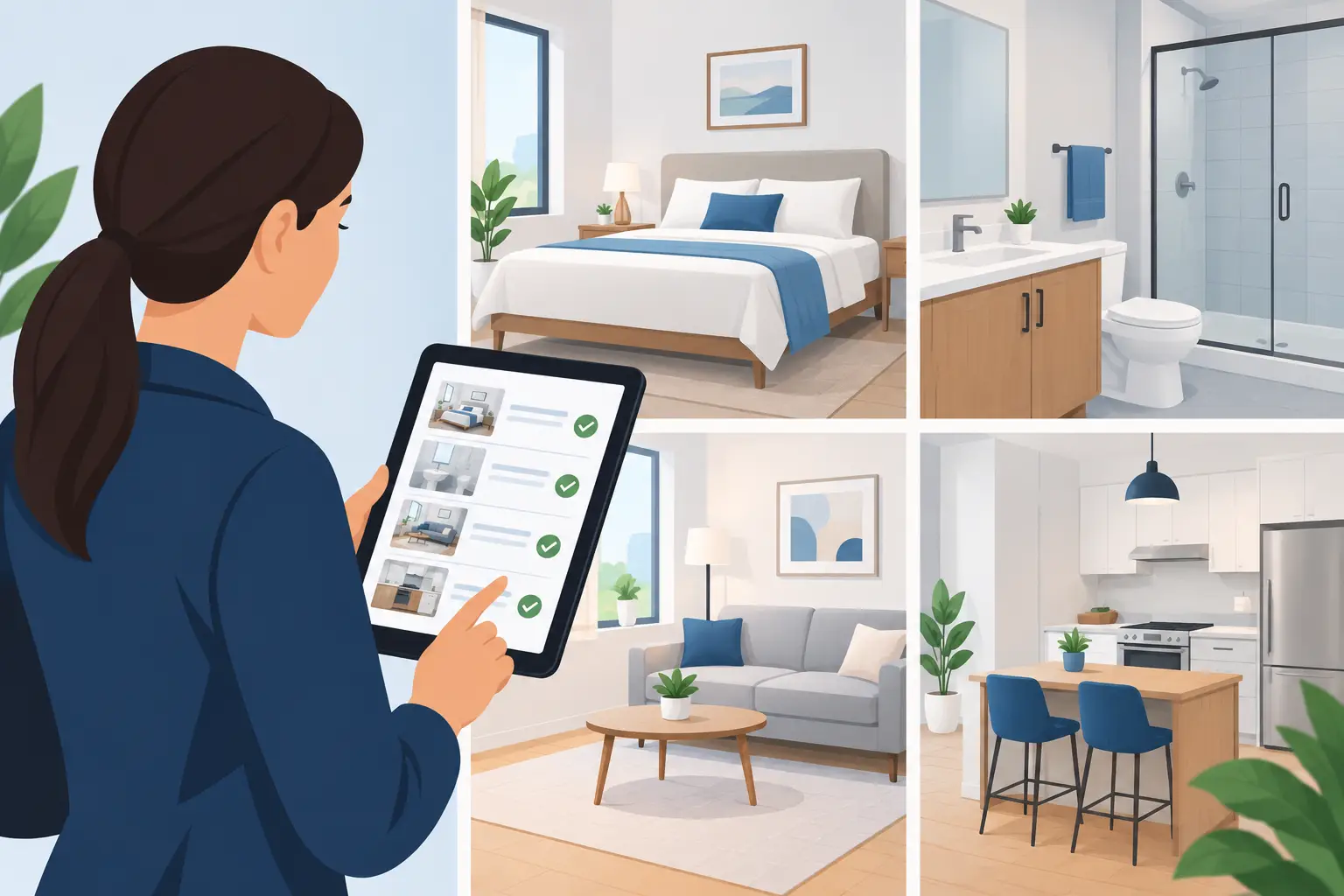
A shared house can look completely different after three roommates, a pet, a few parties, and one rushed move-out. That is why inspection apps matter for rent-by-room landlords. They give you a reliable record of what each bedroom and shared space looked like before someone moved in, while they lived there, and when they left.
Without that record, normal wear can turn into a long text thread. A roommate may not remember a stain, dent, missing key, or damaged blind. You may remember it clearly but have no dated photos or signed checklist to back it up. Nobody wins that conversation.
Why shared houses need a different inspection system
A traditional rental inspection often focuses on one tenant and one whole unit. Rent-by-room properties are different. Each roommate has a private room, but everyone shares the kitchen, bathrooms, halls, laundry area, and sometimes furniture. Responsibility is rarely as simple as “the tenant caused it.”
That means your inspection process needs to show both the condition of a specific room and the condition of the household as a whole. If the fridge shelf cracks, it may be a shared-house issue. If a bedroom door has a new hole, you need to know who occupied that room and what it looked like at move-in.
Paper checklists and camera-roll photos can work when you manage one house and have plenty of spare time. They break down quickly as you add rooms. Photos get mixed with family pictures. Checklists sit in a folder. The move-in document is signed, but nobody can find it when a deposit question comes up six months later.
The goal is not to create more paperwork. It is to make documentation routine, organized, and easy to retrieve.
What inspection apps should do for landlords
The best inspection apps replace scattered evidence with a repeatable process. You should be able to walk through a property on your phone, record the condition of each area, add photos and notes, and keep the finished inspection tied to the right roommate and property.
For shared housing, look for a system that separates private and common areas. Your inspection should account for bedrooms, closets, windows, locks, and room furniture, then cover shared spaces such as the kitchen, bathrooms, living room, entry, and outdoor areas. A single generic “unit inspection” leaves too much room for confusion.
Mobile access matters too. Inspections happen at the property, often between meetings or while a new roommate is waiting with a moving truck. You should not need to take notes on paper, email yourself photos, and rebuild the inspection later at a desk. That is how details get skipped.
A useful app also creates consistency. Every room should be reviewed against the same baseline: walls, flooring, doors, windows, lighting, smoke detectors, cleanliness, and any supplied furnishings. Consistency protects you, but it also makes the process feel fair to roommates. They can see what was documented, rather than feeling surprised by a damage claim at move-out.
Build a move-in inspection that prevents future arguments
The move-in inspection is your starting line. If it is rushed or incomplete, the move-out inspection becomes a guessing game.
Start with the private room. Photograph all walls, floors, ceilings, windows, doors, locks, blinds, and closets. Capture existing marks, chips, stains, and damage close up, then take a wider photo that shows where the issue is located. A close-up of a scratch is helpful. A close-up plus a photo of the full wall is much better.
Next, document what the roommate receives. That may include keys, parking passes, mailbox keys, a bed, dresser, desk, lamp, or other furnished-room items. Note the quantity and condition. Small details are easy to forget until a key is missing or a piece of furniture disappears.
Then inspect the shared areas. Even if a new roommate did not cause pre-existing kitchen wear, they should see the baseline condition of the spaces they will use. This builds clarity from day one. It also gives you a reference point for periodic house checks and future move-outs.
Ask the roommate to review the inspection and flag anything missed within a short, defined window. A few days is usually enough. This gives them a fair opportunity to point out a mark behind a door or a drawer that sticks without reopening the process weeks later.
Use move-out inspections to make decisions, not assumptions
At move-out, use the original inspection as your comparison point. The question is not whether the room looks brand-new. It is whether there is damage beyond normal wear and whether you can document the difference.
Normal wear may include light carpet traffic, minor scuffs, or fading from sunlight. Damage may include large wall holes, broken blinds, missing keys, unauthorized paint, stains requiring replacement, or furniture that was present at move-in but is now gone. The line can depend on the property, the lease, local rules, and the age of the item, so avoid treating every imperfection as a chargeable issue.
Take fresh photos in the same areas you documented at move-in. If there is a problem, add a clear note describing it rather than relying on a photo alone. “Large stain on bedroom carpet near closet, not shown in move-in inspection” is more useful than “carpet issue.”
This is where organized inspection records save real time. You are not searching old group chats while a new roommate is scheduled to move in tomorrow. You can compare records, calculate a reasonable charge if appropriate, and communicate the decision professionally.
Don’t wait until move-out to inspect the house
Move-in and move-out inspections are essential, but they should not be your only check-ins. Shared homes take more daily use than a conventional one-family rental. A small leak under a bathroom sink, a damaged smoke detector, or a loose stair rail is cheaper and safer to address early.
Periodic inspections also help separate maintenance problems from roommate-caused damage. If you document that a bathroom fan was working during a mid-lease check, then find extensive moisture damage later, you have a clearer timeline. If the fan was already failing, you know the issue belongs on your maintenance list instead.
Keep these visits predictable and respectful. Give proper notice, follow applicable state and local requirements, and explain what you are checking. The purpose is to protect the property and keep the household functioning, not to make roommates feel watched.
Pair inspections with clear household responsibility
Documentation alone will not keep a shared house in good shape. Roommates also need to know who is responsible for everyday tasks and how to report problems before they become expensive.
For example, a move-in inspection may show that the kitchen is clean and all appliances work. After that, rotating chores and simple household task assignments can help keep it that way. If someone notices a leak or broken lock, there should be one obvious place to report it instead of hoping it gets mentioned in the group chat.
Cohabi brings inspections, household tasks, reminders, and roommate communication into one mobile-first system built for rent-by-room operations. That matters because a property record is more useful when it lives alongside the day-to-day work of running the house.
Choose the process your portfolio can actually sustain
The right inspection app is not necessarily the one with the longest feature list. Choose one your team, roommates, or future property manager can use consistently. If the process takes an hour per bedroom or requires five separate logins, it will get skipped when turnover gets busy.
A practical system should make it easy to repeat the same workflow across every property: inspect the room, document shared spaces, attach photos, collect acknowledgement, store the record, and revisit it at move-out. As you add more rooms, that consistency becomes a real operating advantage.
Your future self should be able to open a record and understand the condition of a room in minutes, not reconstruct the story from memory. That is the real value of inspection apps: less uncertainty, fewer avoidable disputes, and a shared house that is easier to manage without constantly chasing down answers.