Guide
Landlord Dashboard Software for Shared Houses
Landlord dashboard software helps rent-by-room owners manage reminders, chores, inspections, and roommate accountability across every shared home daily.
Irving Barajas · September 21, 2026
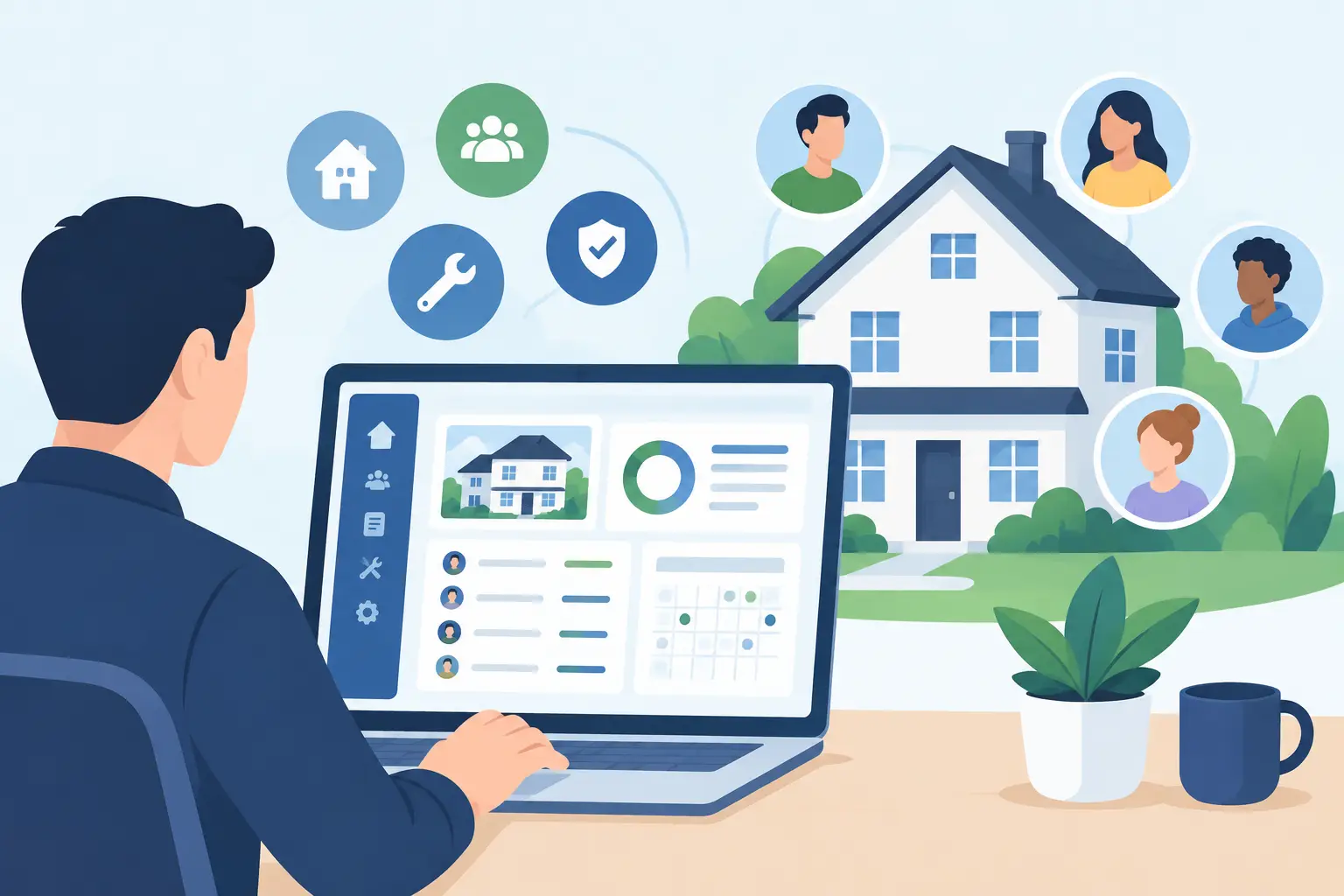
A shared house can look calm from the curb while creating a dozen small management jobs behind the front door. One roommate needs a rent reminder, another says they already took out the trash, a third is moving out Friday, and the group chat has swallowed the message about the leaking bathroom fan. Landlord dashboard software gives rent-by-room operators a single place to see what needs attention without chasing every detail through texts, notes, and memory.
For a conventional rental, a property manager may mainly track a lease, one rent payment, and maintenance requests from one household. A shared home works differently. You are managing individual financial responsibilities, a collective living environment, rotating responsibilities, and frequent changes in occupancy. The right dashboard is not just a prettier spreadsheet. It is an operating system for the house.
Why shared houses need a different dashboard
When five unrelated adults share a home, every recurring task has an ownership question. Who is responsible? When is it due? Was it completed? Does everyone know the expectation? Without a clear system, the landlord often becomes the default answer desk for problems roommates could resolve themselves.
That is why generic property software can feel incomplete for room-by-room rentals. It may keep a tenant record and log a payment, but it often treats the household itself as an afterthought. It does not always account for chore rotations, household task visibility, roommate communication, or inspections tied to an individual room and a shared space.
A useful dashboard makes those moving parts visible at a glance. Instead of opening multiple text threads and spreadsheets, an operator should be able to see upcoming rent activity, overdue items, assigned chores, incomplete tasks, active move-ins or move-outs, and property-condition records. That visibility matters most when you manage more than one house. Small problems do not disappear as a portfolio grows. They multiply.
What landlord dashboard software should show you
The best dashboard is not the one with the most widgets. It is the one that tells you where to act next. For shared-housing landlords, that usually starts with rent, household responsibilities, communication, and property condition.
Rent status without the awkward follow-up loop
Late rent is never just a numbers problem. It creates a communication problem too. You need to be consistent, but no landlord wants to type the same reminder every month or decide who gets a follow-up based on who replied last.
A dashboard should show upcoming and overdue rent activity clearly, while automated reminders keep roommates informed before rent becomes a personal back-and-forth. The goal is not to make every payment issue disappear. Some situations still require a real conversation. The goal is to remove the repetitive chasing so your attention goes to exceptions, not routine reminders.
This also creates a more professional experience for roommates. They receive the same expectations and timing, rather than relying on whether the landlord remembered to send a text after a busy day.
Chores and tasks with a clear owner
Household chores are where vague expectations become drama. If everyone is responsible for cleaning the kitchen, nobody is responsible for cleaning the kitchen. If trash duty rotates but the rotation lives in an old group-chat message, someone will eventually claim they did not know it was their turn.
A shared-house dashboard should make task assignments visible to both the landlord and roommates. Rotating chores can be assigned on a predictable schedule, and completion tracking gives the household a simple way to show what has been done. That does not mean a landlord needs to police every sponge and recycling bin. It means the house has a system before frustration becomes a complaint.
The trade-off is worth recognizing: software cannot create consideration among roommates who refuse to participate. But it can make expectations fair, documented, and hard to misunderstand. That is a much better starting point than a monthly argument about whose turn it was.
Move-in and move-out records that hold up later
Inspections are easy to postpone when a room turns over quickly. Then a stain, broken blind, or wall damage appears at move-out, and everyone is trying to remember whether it was there before. Memory is not documentation.
Your dashboard should keep move-in and move-out inspections organized with property-condition notes and photos. For a room-by-room rental, this is especially useful because responsibility can involve both a private bedroom and shared areas. A consistent inspection process protects the property, but it also protects roommates from being blamed for preexisting issues.
Consistency beats complexity here. A simple repeatable checklist used every time is more valuable than an elaborate process that only happens when you have extra time.
Household communication that does not vanish in texts
Text messages are fast, which is exactly why they become messy. A repair update gets buried under jokes. A notice about guests gets mixed with a debate about the thermostat. Weeks later, nobody can find the original message.
A dashboard with household reminders and communication gives important operational information a place to live. Roommates still need a human, respectful living environment. The point is not to replace every conversation with an app. It is to separate useful house information from the noise of an active group chat.
For landlords, this reduces repeat questions. For roommates, it makes the rules, reminders, and assignments easier to find without feeling like they are being constantly monitored.
How to choose a dashboard for a rent-by-room portfolio
Start with the way you actually manage, not with a massive feature checklist. If you have three rooms in one house, you may not need enterprise accounting workflows or layers of approval settings. If you operate several co-living homes with frequent turnover, you may need more structure around inspections, tasks, and household communication.
Look for a system that treats roommates as active participants, not just names in a database. They should be able to see rent reminders, receive task assignments, complete chores, access inspection steps, and stay informed about the household. When roommates can participate directly, the landlord does not have to relay every update manually.
Also consider the adoption test. Will a new roommate understand what to do in a few minutes on their phone? Will you use the dashboard during a busy turnover week? A system that requires extensive training or constant cleanup can create another administrative job instead of removing one.
Finally, choose software that supports your operating model. Traditional property management platforms can be a reasonable fit for whole-unit rentals, especially if you need their broader accounting or vendor tools. But rent-by-room operators should not have to force a shared-house workflow into a structure built around one leaseholder and one unit. Cohabi is designed around the real day-to-day of shared housing, where individual roommates and the household both need attention.
Build a dashboard habit, not another login
Software only helps when it becomes part of a simple routine. Check the dashboard at a consistent time each week to review overdue rent, upcoming move-ins, incomplete household tasks, and any messages that need your decision. The rest of the time, let automated reminders and visible assignments do their job.
Keep your rules and workflows clear before you add technology. Decide how rent reminders are handled, what chores rotate, what happens when a task is missed, and how inspections are documented. The dashboard should enforce a reasonable system, not compensate for one that does not exist.
You do not need to watch every roommate move to run a well-managed house. You need a reliable view of what is due, what is done, and what needs your attention. When the repetitive stuff is organized, you can spend less time managing roommates and more time improving the property, growing the portfolio, or simply getting your evening back.