Guide
Landlord Software Versus Property Managers
Landlord software versus property managers: compare cost, control, and daily workload to choose the right setup for your shared rental homes confidently.
Irving Barajas · September 27, 2026
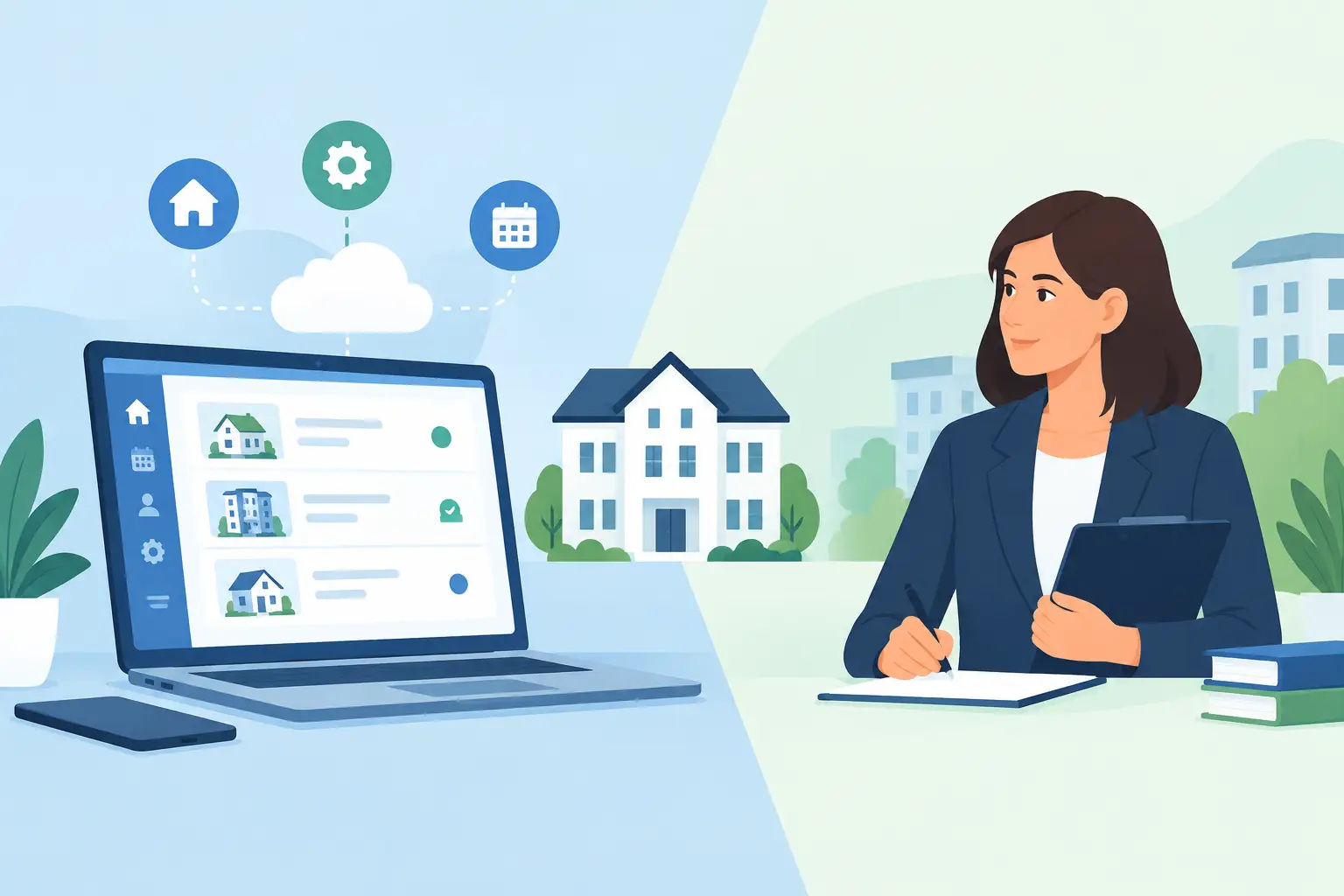
A late-rent text is manageable when you have one tenant. It gets old fast when six roommates across two houses each need a different reminder, answer, or follow-up. That is where the choice between landlord software versus property managers becomes real. You are not just deciding who collects rent. You are deciding how much of your time, margin, and day-to-day control you are willing to give up.
For rent-by-room landlords, the usual advice can miss the point. A shared house is not a conventional rental with one leaseholder and one monthly payment. It is a small household with individual residents, shared spaces, rotating responsibilities, move-ins, move-outs, and plenty of chances for details to disappear into a group chat.
Landlord software versus property managers: the real difference
A property manager is a person or company that takes operational work off your plate. Depending on the agreement, they may market rooms, screen applicants, coordinate maintenance, collect rent, respond to residents, and handle turnovers. In exchange, you pay management fees and often leasing, renewal, or maintenance coordination fees.
Landlord software is a system that helps you run those operations yourself with less manual work. It does not replace judgment or physically visit a property when a pipe breaks. It replaces the repetitive work that turns self-management into a second job: sending the same reminders, tracking who completed a task, documenting property condition, and hunting through texts for what was agreed.
The better option depends on what is actually consuming your time. If you do not want to be involved in leasing, maintenance coordination, resident communication, or local compliance at all, a capable property manager may be worth the cost. If you are comfortable operating your homes but tired of being the human reminder system, software is usually the more direct fix.
Cost is more than a monthly management fee
Traditional property management commonly costs a percentage of collected rent, plus possible placement fees, renewal fees, inspection fees, maintenance markups, or charges for extra services. Exact pricing varies by market and scope, but the math matters more in room rentals because your gross rent may be spread across several individual payments.
Say a house produces $4,500 in monthly rent. A 10% management fee is $450 each month before any separate leasing or maintenance charges. Across several houses, that can become a meaningful share of the cash flow you planned to use for reserves, debt service, or the next acquisition.
That does not mean a manager is overpriced. A good manager can prevent expensive vacancies, respond faster to emergencies, and free up time that is genuinely more valuable elsewhere. But paying a percentage of revenue to solve a problem that is mostly recurring admin can be an expensive mismatch.
Software has a different cost structure. You still own the work, but the system reduces how often you have to touch it. Automated rent reminders can go out without the awkward monthly nudge. Rotating chores can show whose turn it is to take out the trash. Digital inspections can create a record before a roommate moves in and after they leave.
The question is not whether software is cheaper on paper. It usually is. The question is whether you have the capacity to make decisions when a human decision is needed.
Shared houses create work that traditional managers may not cover
A property manager can be excellent at managing a standard apartment lease and still be a poor fit for a roommate-based home. Many management models are built around the unit, not the household. They assume one tenant or one family is responsible for communication, cleanliness, and coordination inside the home.
That model gets strained when four unrelated adults share a kitchen. Someone needs clarity about house tasks. Someone needs to know whether a maintenance issue was reported. Someone needs a reminder that rent is due. And when a room turns over, the property needs condition documentation that is detailed enough to reduce deposit disputes.
Some property managers will handle these items. Others will treat them as outside their scope, send a generic email to the house, or charge extra for the attention they require. Before hiring one, ask specifically how they manage individual roommates, room-by-room leases, shared-house communication, and recurring household responsibilities. Do not assume their answer is included in the standard fee.
This is where a purpose-built tool can make self-management feel much less chaotic. Cohabi is designed around the fact that roommates are active participants in the operation of a shared home, not just names in a database. Residents can see tasks, reminders, inspections, and household communication without relying on a landlord to restate everything in a text thread.
Control matters when your operating model is different
Hiring a manager means delegating more than tasks. You are also delegating parts of the resident experience. That may be exactly what you want. But if your portfolio depends on a particular shared-living standard, you need to be clear about what control you are giving up.
For example, you may have a move-in process that sets expectations about cleaning, common areas, trash, guest policies, and reporting damage. You may want rent reminders to be firm but professional, not personal or inconsistent. You may want every room documented the same way at turnover.
A manager can follow those systems, but only if they are willing to use them consistently. Otherwise, your carefully built operating playbook can turn into a series of exceptions. You might still receive the escalated calls while paying someone else to manage the routine parts.
Software keeps you in the operator seat while making your standards repeatable. The benefit is not micromanagement. It is visibility. You can see what is due, what has been completed, and what still needs attention without checking in with every roommate individually.
The workload test: admin or actual management?
Use a simple test before choosing a path. Look at the last 30 days and sort your property work into two buckets.
The first bucket is repetitive administration: rent reminders, chore rotation, task follow-up, sending move-in instructions, inspection checklists, and answering questions that a clear system could answer. This work is a strong candidate for automation.
The second bucket requires experience, judgment, or boots on the ground: handling a serious maintenance emergency, resolving a lease violation, showing rooms, overseeing a major renovation, or dealing with a difficult legal situation. This is where a property manager, local team member, or trusted vendor can earn their keep.
If most of your frustration sits in the first bucket, do not rush to outsource the entire operation. Put the repetitive stuff on autopilot first. You may find that self-management becomes sustainable again.
If the second bucket is consuming your evenings, you live far from the property, or you simply do not want resident-facing responsibility, hiring help is reasonable. Freedom is not always about doing everything yourself. It is about choosing what you keep.
A hybrid approach often works best
This does not have to be an all-or-nothing decision. Many growing operators use software to manage the household rhythm while outsourcing specialized work. They keep automated communication, rent reminders, task accountability, and property documentation in one system. Then they use local vendors for repairs, cleaners for turnover work, and legal or leasing support when needed.
That approach avoids two common mistakes. The first is trying to personally remember every detail until the portfolio becomes unmanageable. The second is handing over the whole operation before you have clear systems, then paying management fees while still answering avoidable questions.
A clean process also makes future delegation easier. If you eventually hire an assistant, house manager, or third-party manager, they inherit documented routines instead of a pile of scattered messages and your personal memory.
Choose the setup that protects your time and margins
Property managers make sense when you need true delegation and are comfortable trading some revenue and control for it. Landlord software makes sense when you want to stay close to the operation without spending every month chasing roommates about rent, chores, and move-out details.
For shared housing, the goal is not to remove every human interaction. It is to remove the unnecessary ones. Let the system handle the reminders, assignments, and records so your attention is available when a real issue needs an owner. Your house should not run on your ability to remember who said what in last Tuesday's group chat.