Guide
9 Move Out Documentation Tips for Room Landlords
Use these move out documentation tips to protect your shared rental, reduce deposit disputes, and keep every room turnover organized and fair for all.
Irving Barajas · October 23, 2026
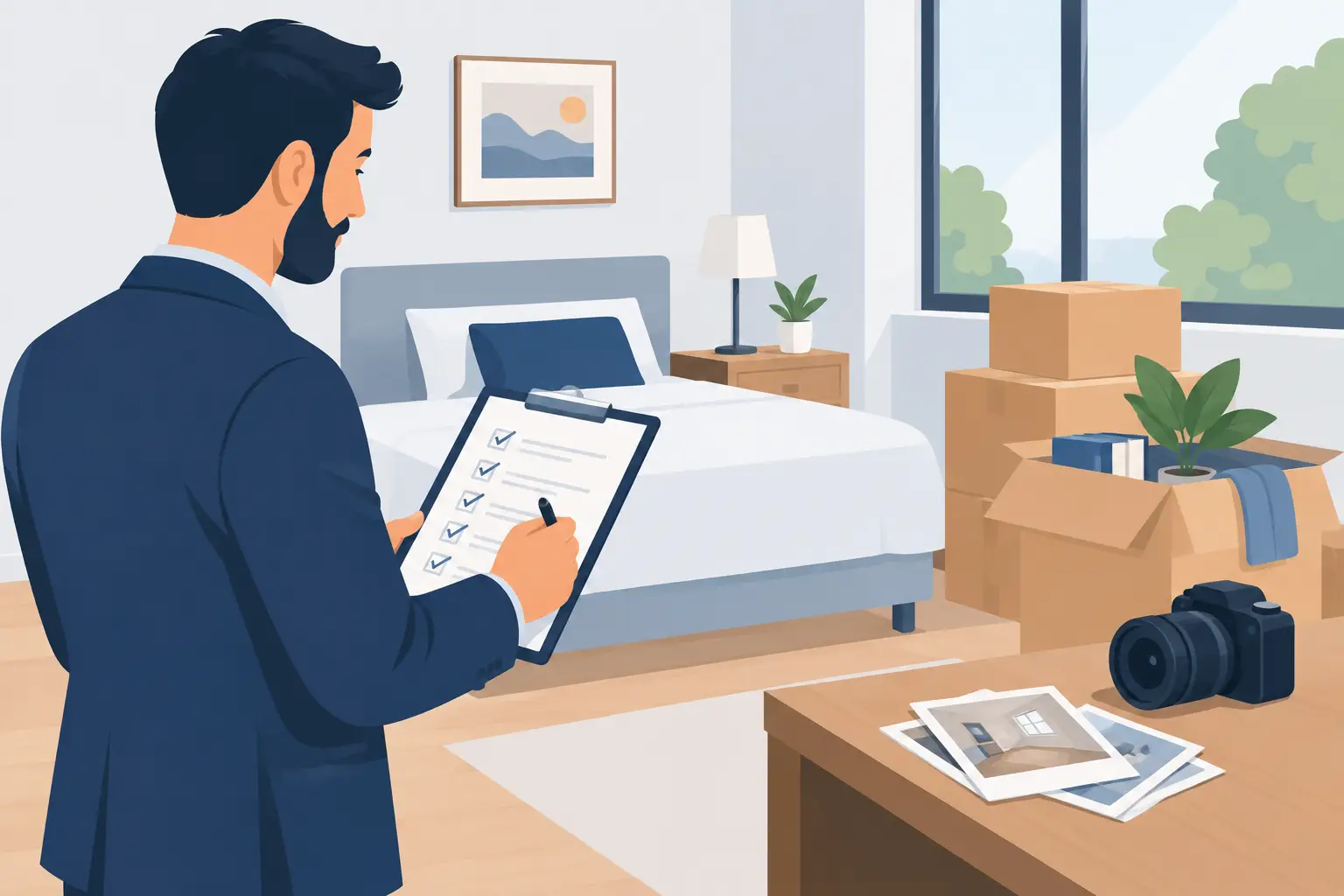
A roommate moves out on Friday. By Monday, the next person wants the room. That fast turnover is great for occupancy, but it is also when missing photos, vague notes, and old group-chat messages turn into a deposit dispute. These move out documentation tips help room-by-room landlords close out each roommate fairly without turning every turnover into a forensic investigation.
Shared houses need a different process than a standard single-family rental. One roommate may leave a damaged bedroom door while the kitchen is still being used by four people. If you only document the house as a whole, it becomes hard to show what changed, who was responsible, and what was already worn before someone gave notice.
Start With the Move-In Record
Good move-out documentation begins before move-out day. The comparison that matters is not between your memory and a roommate's memory. It is between a clear move-in record and a clear move-out record.
For every new roommate, document their private room, assigned storage, keys or access devices, and any shared-area condition that could reasonably become part of a later question. A dated inspection with photos, short video, and written condition notes is usually enough. The goal is not to photograph every inch of the property like a crime scene. It is to establish a usable baseline.
Have the roommate review the record when possible. Their acknowledgment does not mean they agree to pay for every future issue. It simply confirms that both sides had a chance to see the starting condition. That small step removes a lot of "it was already like that" back-and-forth later.
Use These Move Out Documentation Tips Before the Final Day
Do not wait until the roommate has loaded their last box into a car. Send a clear move-out checklist when notice is given, then repeat the practical details a few days before departure. Include the move-out date, cleaning expectations, key return instructions, what belongings must be removed, and how to provide a forwarding address.
Be specific about shared spaces. A roommate should know they are expected to remove their own food from the fridge, belongings from cabinets, and personal items from the bathroom. But avoid assigning them responsibility for normal messes created by roommates who are staying. The cleaner who moved out should not become the default payer for a kitchen that is still actively in use.
It also helps to state what will happen after move-out: the room will be inspected, documentation will be reviewed, and any deposit accounting will follow the lease and applicable state and local rules. This is not about sounding threatening. It is about making the process predictable.
Document the Room and Shared Areas Separately
A room-by-room rental has two categories of condition. Keeping them separate is one of the most useful habits an operator can build.
First, inspect the departing roommate's private space. Take wide photos that show the full room, then close-ups of any marks, holes, stains, broken blinds, damaged flooring, or missing fixtures. Photograph closets, windows, doors, smoke detectors, and provided furniture if the room was furnished. Short videos can add context, but photos are easier to review later, so use both if needed.
Second, inspect any shared-area items tied to that roommate. Maybe they had an assigned parking spot, a garage shelf, a bathroom cabinet, or a coded entry fob. Document vacant storage and returned access items. For damage in common areas, be careful: a photo can prove condition, but it does not automatically prove who caused it.
If the responsible person is unclear, review your earlier inspection records and any relevant written reports before making a charge. Shared-house damage can require more judgment than bedroom damage. A fair process protects your credibility with the roommates who remain, too.
Capture Details That Can Actually Be Used Later
A blurry photo of a wall from six feet away rarely settles anything. Your documentation should answer simple questions: What is the issue? Where is it? How serious is it? When was it observed?
Take photos in good light and include context before close-ups. For example, capture the full bedroom wall, then a closer image of the hole near the desk area. Add a short note such as "two nail holes above desk, not present at move-in" rather than relying on a file name like IMG_4829.
Time stamps are helpful, but do not depend on them alone. Store records in a consistent place under the property, room, roommate, and inspection date. When documentation is scattered across personal phones, email threads, and texts, finding the right evidence takes longer than the inspection itself.
Distinguish Damage From Normal Wear
Not every imperfection is a roommate charge. Paint fading over time, lightly worn carpet in a high-traffic area, and small scuffs from ordinary living may be normal wear. A large unauthorized wall mount, pet damage, a broken door, or a deep carpet stain is a different conversation.
The line depends on the condition at move-in, the length of the tenancy, the item involved, and your state and local rules. Do not treat a turnover cleaning bill as automatic proof of damage, either. Cleaning expectations and deposit deductions can be regulated differently depending on where the home is located.
When in doubt, document first and decide second. Get an invoice or reasonable repair estimate, retain the evidence, and follow the notice and timing requirements that apply to your rental. For unusual disputes or significant deductions, local legal guidance is worth the cost.
Create a Clean Chain From Inspection to Deposit Accounting
Documentation loses value when the next steps are vague. Once the inspection is complete, match each potential charge to the relevant photo, note, invoice, and lease provision. If you replace an item, preserve the receipt and avoid charging more than the allowable value of the damaged item. New-for-old math can get tricky when a fixture or carpet was already near the end of its useful life.
Send required deposit accounting on time and keep a copy of what you sent. Even when there are no charges, a documented closeout is useful. It shows the roommate that the process was completed and gives you a clean record if questions surface later.
This is also a good moment to update the room's condition for the next move-in. If you patched walls, replaced a lock, or deep-cleaned the carpet, record the completed work before the next roommate arrives. Otherwise, your next baseline starts out incomplete.
Make Documentation Repeatable Across Every House
The problem is rarely that a landlord does not know how to take photos. The problem is doing it consistently across six rooms, three houses, overlapping move-outs, and a phone full of unfiled images.
Use the same inspection flow each time: private room, assigned storage, access items, shared-area belongings, notes, photos, and follow-up work. A mobile-first system such as Cohabi can keep move-in and move-out inspections attached to the right roommate and property instead of buried in a camera roll or text thread.
Consistency also makes the process feel more professional to roommates. They see that everyone receives the same checklist, the same inspection process, and the same standard for returning a room. That reduces the sense that a deduction was invented after the fact.
Keep the Conversation Factual
Move-out disputes become expensive when the discussion turns personal. Stick to dates, condition records, lease terms, repair evidence, and the actions needed to resolve the issue. A calm message with attached documentation is stronger than a long argument about who is being reasonable.
If a roommate disagrees, give them a practical way to point to the specific item they question. You may find that your evidence supports your original decision. You may also catch an issue that was present at move-in or caused by another household member. Both outcomes are better than guessing.
A good move-out record does more than protect a deposit. It lets you turn rooms faster, set a clear baseline for the next roommate, and manage the house instead of replaying old conversations. Build the process once, use it every time, and let the documentation do the talking.