Guide
Rent Automation for Room-by-Room Landlords
Rent automation sends consistent reminders, reduces awkward follow-ups, and helps room-by-room landlords manage more homes with less daily work each month.
Irving Barajas · October 1, 2026
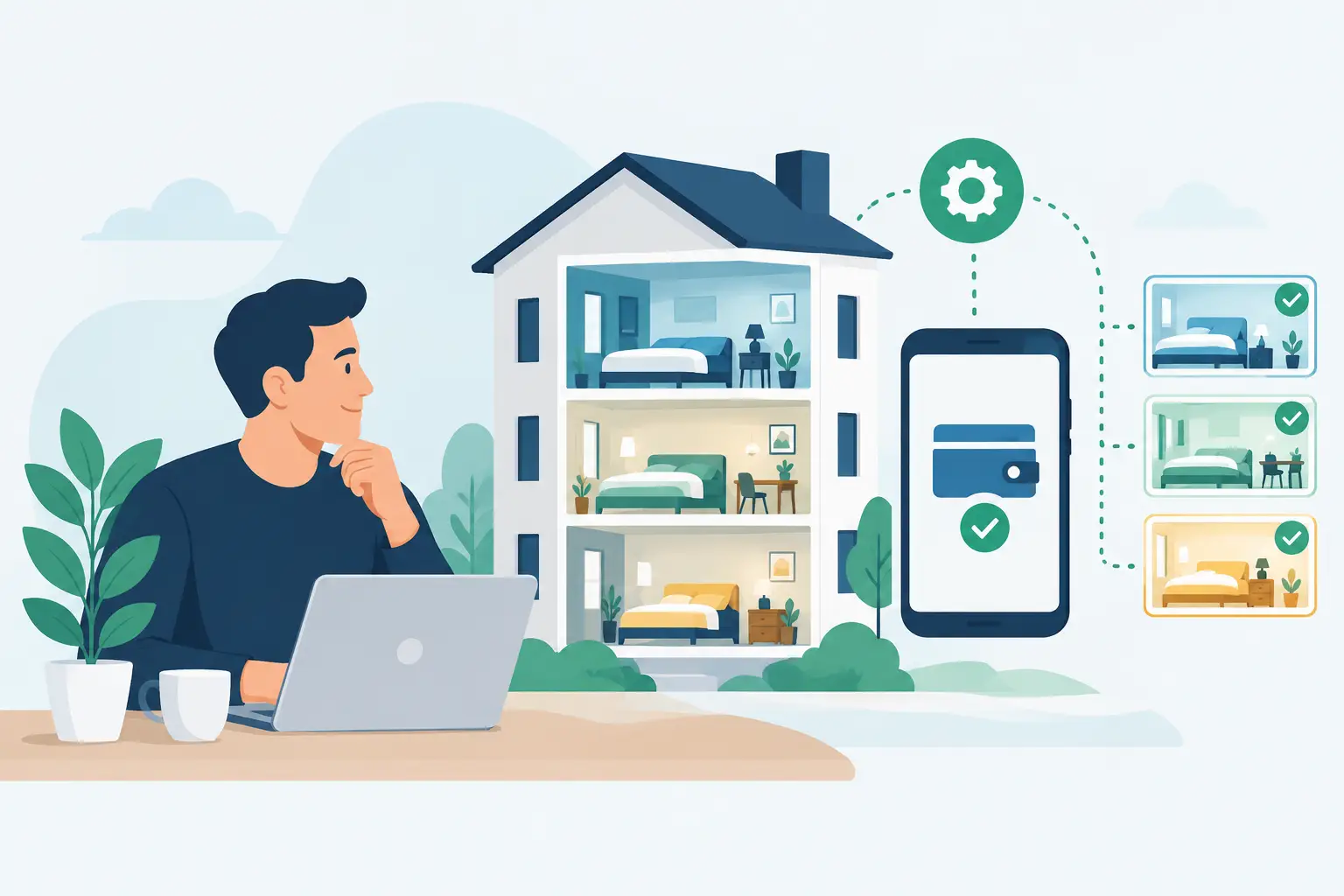
A rent reminder sent at 10:00 a.m. on the first of the month is easy. Sending the right reminder to 18 individual roommates across four houses, following up without sounding frustrated, and keeping track of who has responded is where the work piles up.
Rent automation gives room-by-room landlords a better system. Instead of relying on memory, calendar alerts, and another round of awkward texts, you set a consistent process that keeps every roommate informed. The result is less chasing, fewer missed communications, and more time to focus on the parts of your portfolio that actually need your attention.
Why Rent Automation Matters More in Shared Houses
A traditional rental might have one lease, one household, and one monthly payment conversation. A shared house can have five separate renters, five payment schedules to monitor, and five people who may interpret “rent is due soon” very differently.
That difference matters. When you rent by the room, every new bedroom adds another relationship to manage. A single late payment may only take a few minutes to address. But repeated manual reminders across several homes become a job of their own.
The problem is not that landlords forget rent is due. The problem is that manual follow-up is inconsistent. You may remember to message one roommate but not another. You may send a reminder late because you were handling a maintenance issue. Or you may avoid following up because you have already had three payment conversations that week.
Roommates feel that inconsistency too. One person gets a personal text, another sees a note in a group chat, and someone else says they never saw anything. None of this makes rent collection easier. It creates room for confusion, excuses, and unnecessary tension.
Rent automation creates a predictable rhythm. Renters know when reminders arrive. You know the process is happening without opening your phone and starting another message thread.
What Good Rent Automation Actually Does
Automation is not about making landlord communication cold or impersonal. It is about automating the repetitive part so you can be more present when a real issue needs a human conversation.
At its simplest, a good system sends scheduled reminders before rent is due, on the due date, and after the due date when appropriate. The timing should be clear and consistent across your properties. A roommate should not have to wonder whether you will mention rent this month or whether the reminder applies to them.
For shared housing, individual communication matters. A whole-house group chat is useful for a broken dishwasher or a package left on the porch. It is not the right place to discuss an individual roommate’s payment status. Rent reminders should preserve privacy while still making expectations clear.
The best setup also gives you visibility. You should be able to see which reminders have gone out and which roommates may need direct follow-up. Automation handles the routine messages. You handle exceptions, payment plans, or circumstances that deserve a real conversation.
That is the practical division of labor: the system handles consistency, and the landlord handles judgment.
Automated does not mean hands-off
No software can solve a roommate’s cash-flow problem or replace a clear lease agreement. If someone is late, you still need an established policy and a professional next step. Rent automation simply means you are not spending your time doing the same administrative task over and over.
It also does not mean sending an endless stream of notifications. Too many reminders get ignored just as quickly as no reminders. A useful cadence is timely, predictable, and respectful. Think of it as a nudge, not a digital nagging machine.
How to Set Up Rent Automation That Roommates Will Respect
Start with your actual operating rules, not the software settings. Decide when rent is due, when you want reminders sent, what happens after a missed due date, and when you personally step in. If those rules are vague, automation will only deliver vague communication faster.
Then make the schedule easy to understand. For many room-by-room operators, a reminder several days before rent is due gives roommates time to prepare. A due-date reminder reinforces the deadline. A late reminder can state the next action clearly without turning every delay into a debate.
Your wording matters. Keep messages short, neutral, and specific. “Rent is due tomorrow” works better than a long paragraph about the importance of paying on time. If your lease includes late fees or a grace period, make sure the reminder language matches your documented policy. Do not improvise penalties through text.
Before you turn on automation, communicate the system to current roommates. Let them know that reminders will arrive on a set schedule and that the goal is consistency for everyone in the house. This prevents the common reaction of, “Why did I get this message?” It also makes your operation feel more professional from the start.
For new move-ins, explain the rent reminder process as part of onboarding. Shared housing works better when expectations are stated early, before a roommate has moved their boxes into the smallest bedroom and joined the household chat.
The Real Payoff: Less Chasing, Better Documentation
The obvious benefit of rent automation is time. A reminder that sends itself saves a few minutes. Multiply that by several reminders, several roommates, and every month of the year, and the savings become meaningful.
But the bigger value is operational consistency. When your communication follows a documented schedule, you are less likely to overlook a late payment or rely on memory. You also have a cleaner record of what was communicated and when.
That matters when a payment issue turns into a larger conversation. You do not want to scroll through a personal text thread trying to remember whether you reminded someone last Tuesday. A clear activity history makes it easier to respond calmly and fairly.
Consistency can improve roommate behavior, too. Most people respond better to systems than to surprise follow-ups. When reminders are expected, paying rent becomes part of the normal monthly routine rather than a personal interaction they hope to avoid.
There is a subtle benefit for landlords as well: automation removes some of the emotional weight. You are not the person who has to initiate every uncomfortable conversation. The system gives the initial reminder, and you can reserve your energy for situations where a conversation is genuinely needed.
Rent Automation Works Best With the Rest of the House
Rent is rarely the only recurring management task in a shared property. The same landlord who is following up on rent may also be asking who took out the trash, whether the move-in inspection was completed, and who reported the bathroom leak.
That is why disconnected tools create so much extra work. Rent reminders in one app, chores in a group chat, inspections in a photo folder, and property notes in a spreadsheet may technically work. They also force you to remember where everything lives.
A shared-house platform such as Cohabi brings routine roommate coordination into one place. Rent reminders, household tasks, inspection documentation, and everyday communication can follow organized processes instead of living in your head. The goal is not more software. It is fewer loose ends.
This is especially useful as you add properties. A landlord with one house can often patch together a system using texts and good intentions. A landlord with six houses needs repeatable workflows. Otherwise, every new room added to the portfolio adds a matching amount of administrative work.
When Automation Needs a Human Follow-Up
Automation should handle standard reminders, but it should not replace good landlord judgment. Some situations call for direct contact: a roommate who has communicated about a temporary hardship, a payment that appears to have been made but is not recorded, or a repeated late-payment pattern.
A thoughtful follow-up can be firm without being hostile. Refer to the due date, the amount owed, and the agreed next step. Keep the conversation private and factual. The point is to protect your business while treating the roommate like an adult.
It also helps to watch for patterns across a house. If several roommates are regularly late, the issue may be your payment timing, your onboarding process, or unclear expectations. Automation gives you a more reliable baseline, which makes those patterns easier to spot.
Build a System You Do Not Have to Babysit
The right rent process should still work when you are on vacation, at your day job, handling a repair, or simply trying to have a weekend without checking whether everyone paid. That is the standard worth aiming for.
Set clear rules, automate the reminders, keep payment communication private, and make sure you can see where follow-up is needed. Then let the system do its job. Your shared houses do not need more group-chat messages. They need a routine that keeps rent moving without making you the monthly reminder department.