Guide
Rent Payment Software for Room-by-Room Landlords
Rent payment software helps room-by-room landlords reduce late payments, automate reminders, and keep every roommate accountable without chasing texts.
Irving Barajas · October 9, 2026
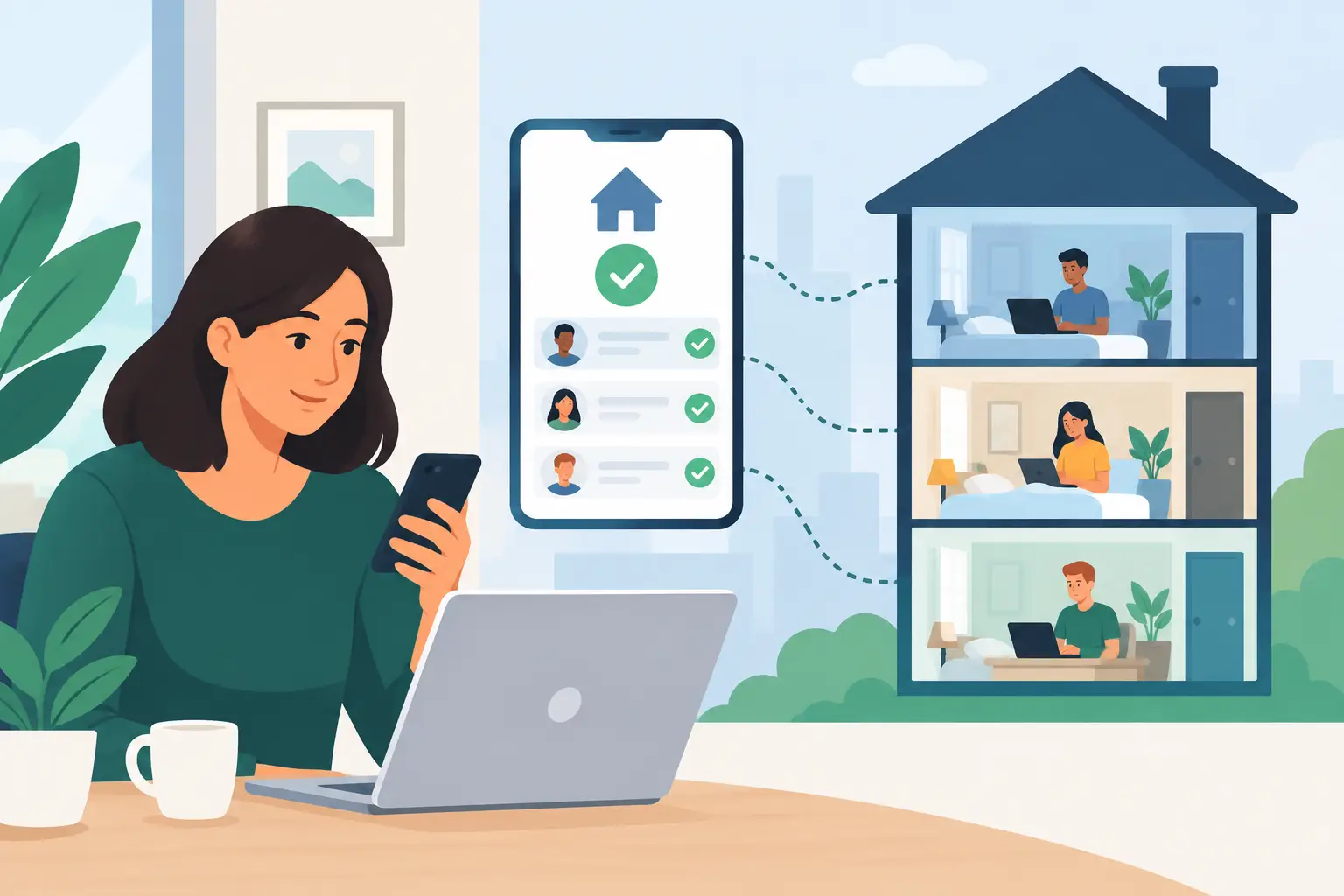
A shared house can have six rent due dates, six different payment habits, and six people who assume a quick text is all it takes to sort things out. That works until it does not. Rent payment software gives room-by-room landlords a system for keeping each roommate informed, accountable, and on schedule without turning the first week of every month into a follow-up marathon.
For a traditional single-family rental, rent is usually one amount from one household. In a shared home, every room is its own relationship. One roommate pays early, another pays after a reminder, and a third says they thought rent was due tomorrow. The money matters, but so does the administrative burden around it.
Why Shared Houses Need Different Rent Payment Software
Rent-by-room operators do not just manage properties. They manage individual residents within active households. That changes the job.
When a whole house is leased to one tenant, a late payment conversation stays between the landlord and that tenant. In a shared house, one late roommate may create tension for everyone else, especially when utilities, cleaning expectations, or household responsibilities are already being discussed in the same group chat. You need communication that is direct without making the house feel like a public late-payment scoreboard.
The right system gives each roommate clarity about what they owe and when it is due. It also gives you a reliable process for reminders, documentation, and follow-up. Instead of trying to remember who has paid, who needs a nudge, and who already replied to last night's text, you can see the situation clearly.
That is the real value. Good rent payment software is not only about moving money. It is about removing the repeated manual work that comes before and after a payment is due.
Start With the Workflow, Not the Payment Button
It is easy to shop for software based on payment processing alone. Online payment options are useful, but landlords should first map the workflow they actually need.
Ask what happens when rent is coming due. Do roommates receive a consistent reminder? Can they see the amount and due date without asking you? Do you have an easy way to track who has responded or completed the task? What happens when someone is late? And can you find the relevant record later without searching old messages?
For a small portfolio, a basic payment tool may be enough if you only need to accept rent electronically. But as you add rooms, the gaps become obvious. A payment app may confirm a transfer, yet it will not necessarily help organize household communication, assign responsibilities, document a move-out, or keep a resident from claiming they never saw an important reminder.
Shared housing runs better when rent is part of one operating routine. That does not mean every landlord needs complex enterprise software. It means the system should fit the reality of multiple unrelated adults living under one roof.
Payments and reminders solve different problems
Payment collection answers, “How does the money get to me?” Reminders answer, “How do roommates know what is expected before there is a problem?” Both matter, but they are not interchangeable.
A resident might have a preferred bank transfer method, while you still need a consistent schedule of rent reminders. Another landlord may use a payment processor but struggle because every late payment requires a personal text. In that case, the bottleneck is not payment acceptance. It is communication and accountability.
Look for a setup that lets you create predictable expectations. Rent due dates should not live only in your head, in a spreadsheet, or in a text thread from three months ago.
What to Look for in Rent Payment Software
The best choice depends on your portfolio, payment methods, and local requirements. Still, room-by-room landlords should prioritize a few practical capabilities.
First, each roommate should be treated as an individual payer. Avoid systems built around one leaseholder making one household payment if that is not how your properties operate. You need visibility at the room level, not just the property level.
Second, reminders should be automated and consistent. A reminder sent by software feels routine. A reminder sent manually at 8:47 p.m. after you have had a long day can feel personal, even when it should not. Automating the repetitive stuff protects your time and creates a more professional experience for residents.
Third, payment status needs to be easy to check. You should not have to open multiple apps, compare screenshots, or ask your bookkeeper whether someone paid. A quick view of what is due, paid, or overdue helps you act early and avoid avoidable confusion.
Finally, consider the rest of the shared-house workflow. If rent communication, tasks, inspections, and household announcements all live in different places, you are still managing a patchwork. The software does not need to do everything, but it should reduce the number of times you copy information from one tool to another.
Build a Rent Process Roommates Can Follow
Software helps most when the process behind it is simple. Residents should know the due date, accepted payment method, late-fee policy, and what happens if they expect a delay. Put those expectations in writing at move-in, then repeat the important parts through scheduled reminders.
Keep the language clear. “Rent is due on the first” is better than a vague message that leaves people guessing about timing. If there is a grace period, state it. If payment instructions change, communicate that through one dependable channel instead of hoping everyone notices a group-chat message between photos of somebody's dog and a debate about the kitchen trash.
Consistency also matters when rent is late. A fair process might include an automatic reminder before the due date, a follow-up after the due date, and a documented next step based on the lease and applicable law. The exact policy varies by property and state, so your software should support your process, not invent one for you.
The goal is not to make the experience cold or punitive. Most roommates want a clear, low-friction way to stay in good standing. Clear reminders make that easier. When someone does fall behind, you have a record of what was communicated and when.
Avoid the Group-Chat Trap
Group chats are useful for a leaking faucet or a package left at the door. They are a poor system for individual rent accountability.
A group message about rent can make on-time roommates feel like they are being nagged for someone else's issue. It can also create unnecessary embarrassment for the person who is late. Private, automated communication keeps rent matters where they belong while preserving a healthier household dynamic.
This is especially helpful when you manage several houses. The more properties you operate, the more likely a manual process will break down. You may send the wrong reminder, forget to follow up, or spend an hour piecing together what happened across texts, email, and payment notifications.
Cohabi helps landlords bring rent reminders and household operations into one mobile-first place, so the house can stay organized without constant check-ins. The difference is not more messages. It is fewer messages that you have to personally send.
Use Payment Data to Improve Operations
Over time, payment patterns can show where your process needs work. If several new roommates pay late in their first month, your move-in communication may be unclear. If reminders dramatically improve on-time payments, keep them scheduled. If one property has more confusion than another, check whether its due dates, payment instructions, or lease language are consistent.
Do not assume every late payment is a software problem. Sometimes the issue is affordability, a roommate's changing circumstances, or a policy that needs to be enforced. Software cannot replace sound screening, a clear lease, or good judgment. It can make the routine parts more visible so you can spend your attention where it is actually needed.
There is also a scaling benefit. When your process is documented and repeatable, adding another room does not automatically add another set of manual reminders to your calendar. That is how self-managing landlords grow without building themselves a second full-time job.
A Better Standard for Shared-House Rent
The best rent process is almost boring. Roommates know when rent is due. They receive the right reminder at the right time. You can quickly see what needs attention. Nobody has to hunt through old texts to figure out what was said.
That may not sound flashy, but boring is a win when you are managing roommates. Put rent on a dependable system, keep expectations clear, and save your personal follow-up for the moments that actually require a landlord's judgment.