Guide
Rental Workflow Software for Shared Homes
Rental workflow software helps shared-house landlords automate rent reminders, chores, inspections, and follow-ups across every property with less effort.
Irving Barajas · November 26, 2026
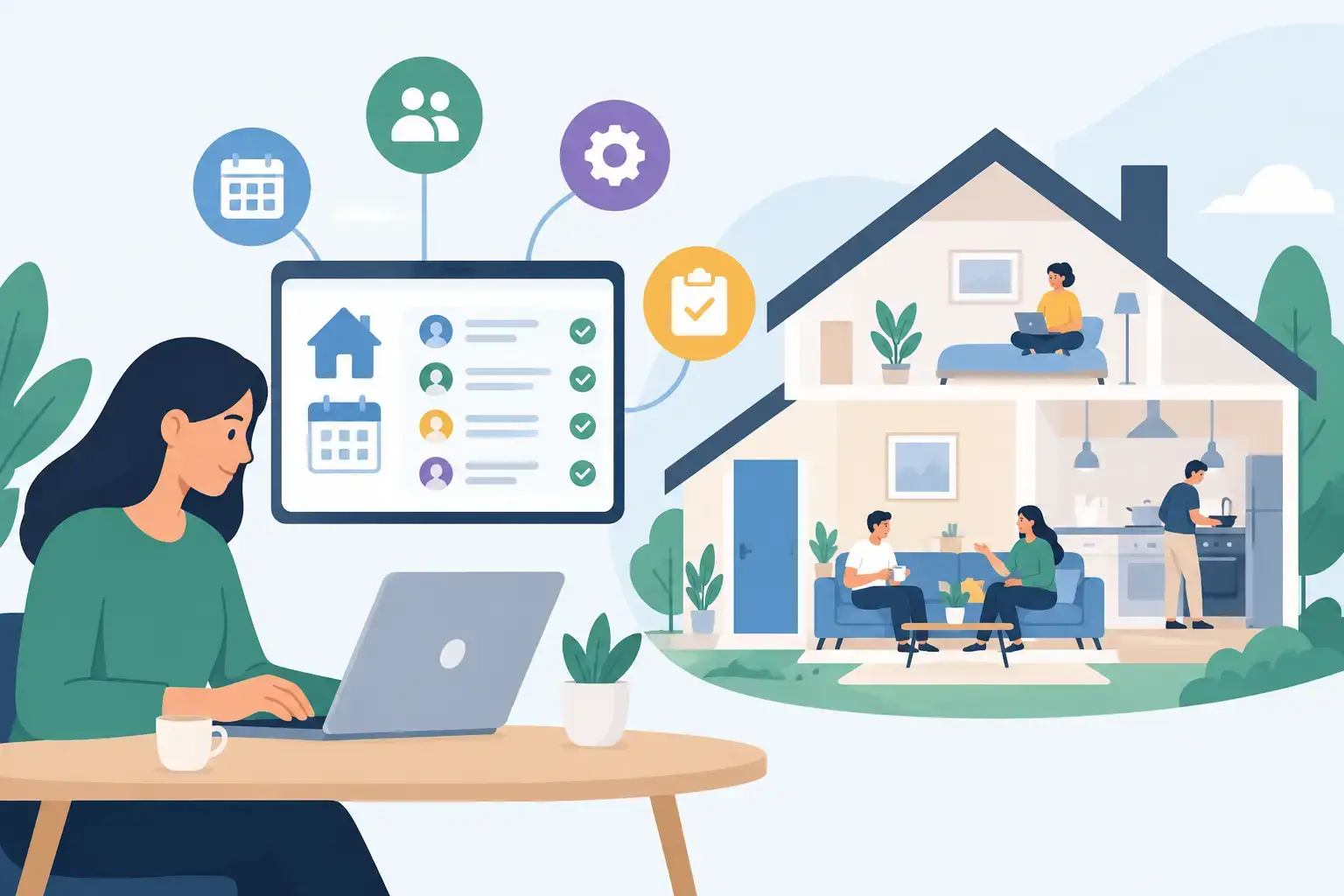
A rent-by-room property can look simple on paper: lease the bedrooms, collect rent, keep the house in good shape. Then Tuesday arrives. One roommate asks who is taking the trash out, another says they never got the rent reminder, and someone moving out insists that scratch on the wall was already there.
That is where rental workflow software earns its keep. It is not just a place to store tenant names and rent amounts. For shared homes, it is a system for the repeatable work that otherwise lands in your texts, notes app, calendar, and memory.
Why shared homes need different workflows
Traditional rentals are often managed at the unit level. One lease, one household, one monthly payment, and usually one main point of contact. A shared house works differently. You may have five separate adults, five payment situations, five move-in dates, and five interpretations of what “clean kitchen” means.
The property is one house, but the operations are individual and communal at the same time.
That difference creates a lot of small management jobs. You remind each roommate about rent. You answer the same question in separate messages. You decide who is responsible for a household task. You document a room before someone moves in, then hope you can find those photos months later when they move out.
None of those tasks is difficult on its own. The problem is volume and repetition. Add a second or third house, and a few minutes here and there turns into a real part-time job.
Rental workflow software gives those recurring jobs a home. Instead of relying on you to remember every next step, the system keeps the house moving.
What good rental workflow software should handle
The best system for a room-by-room operator is not the one with the longest feature list. It is the one that takes the repetitive work off your plate while making expectations clear for roommates.
Rent reminders without the awkward chase
Late rent is frustrating. So is feeling like you have to personally nudge adults every month. Manual reminders also tend to be inconsistent. You might send them early one month, forget until the due date the next, then spend the following week checking who has responded.
Automated rent reminders create a more consistent process. Roommates receive a reminder on schedule, not because you happened to have time between work, family, and a maintenance call. That makes rent communication feel less personal and more like a normal part of living in a professionally managed home.
Automation will not solve every late payment. Some situations still require a direct conversation. But it removes the needless first round of chasing and gives you a reliable record of communication.
Household chores with a visible owner
Most shared-house friction is not dramatic. It is a full trash bin, dishes left in the sink, or a bathroom that everyone thought somebody else would clean.
A rotating chore system answers the question before it becomes a group-chat argument: whose turn is it? Tasks should be assigned clearly, rotate fairly when appropriate, and show when they have been completed. If the kitchen needs attention, there should be no mystery about who owns it this week.
This also protects you from becoming the house referee. You set the system and expectations. Roommates can see assignments and due dates for themselves. If a task is missed, you have a simple fact to address instead of sorting through competing stories.
Tasks beyond the chore chart
Not every task is recurring. A loose handrail, a smoke detector battery, a yard issue, or a request to clear a hallway needs a specific owner and follow-up.
Task assignments help turn a vague request into an accountable next step. The difference between “Can someone handle this?” and “Alex is assigned this task, due Friday” is enormous. One is a message that can disappear. The other is a responsibility that can be tracked.
For landlords, completion tracking matters as much as assignment. You should not have to wonder whether an issue was handled or send three follow-up texts to find out.
Move-in and move-out documentation
Inspections are one of the least exciting parts of managing a shared rental and one of the most valuable. Without consistent documentation, property condition disputes become a memory contest. Those rarely end well.
A repeatable move-in inspection captures the condition of the room and relevant shared areas before a roommate settles in. A move-out inspection creates the same clarity when they leave. Photos, notes, and checklists should be organized by the person and property, not buried in a camera roll or scattered across email threads.
The goal is not to make roommates feel watched. It is to create fairness. A roommate should not be charged for pre-existing damage, and an owner should not have to absorb new damage because there is no record of what the room looked like before move-in.
Communication that does not get buried
Group chats are useful until they are not. A message about a broken appliance gets buried under weekend plans. A landlord posts a house reminder, and half the residents say they never saw it. Then you are copying, pasting, and repeating yourself.
A shared-house workflow needs a clear place for household communication and reminders. Rent notices, task assignments, inspection information, and property updates should be easy to find later. That gives roommates clarity and reduces the number of “just checking in” messages you need to send.
How to build a workflow that roommates will actually use
Software cannot fix an unclear house. Before setting up automations, decide what your operating rules are. Keep them simple enough that a new roommate can understand them quickly.
Start with the repeatable moments in every resident's experience: before move-in, at move-in, each rent cycle, during routine house operations, and at move-out. For each moment, ask what needs to happen, who needs to know, and what proof or follow-up you need.
For example, move-in may include a room inspection, house expectations, and an initial chore assignment. Monthly operations may include rent reminders and recurring chores. Move-out may include notice confirmation, inspection scheduling, condition documentation, and task completion.
Do not automate chaos. If you are sending vague reminders now, automating the same vague reminder will not improve accountability. Use specific language, clear deadlines, and an obvious owner for each task.
It also helps to distinguish between house-wide communication and individual communication. A reminder about keeping common areas clear belongs with the whole household. A question about an individual balance or inspection belongs with that roommate. This keeps private matters private and makes shared reminders easier to act on.
Where automation helps, and where it does not
The right automation reduces repetitive effort. It does not remove your judgment as an owner-operator.
Automate predictable work: rent reminders, recurring chore rotations, inspection checklists, household notices, and follow-ups on assigned tasks. These are the actions that should happen consistently regardless of how busy you are.
Keep human judgment for exceptions. A roommate who is late because of a banking error needs a different response than one who repeatedly ignores every reminder. A damaged room may require context that a checklist cannot provide. A conflict between roommates may call for a conversation, not another notification.
That balance matters. Too little structure turns you into a full-time reminder service. Too much rigid automation can make a shared home feel cold or impersonal. The goal is a professional system that leaves room for reasonable human decisions.
Choosing software for a rent-by-room portfolio
Many property management platforms were designed for conventional rentals. They may handle accounting or leases well but treat every home as one unit with one tenant relationship. If you manage by the room, that can force you back into spreadsheets and group texts for the parts of the job that create the most daily friction.
Look for software that recognizes both sides of shared housing: individual roommate responsibility and household-level operations. You need visibility into each resident's activity, while also being able to manage the shared kitchen, chores, reminders, and property condition as one home.
The experience matters, too. If roommates need extensive training to check a task or review an inspection, adoption will suffer. Mobile-first tools are usually a better fit because the work happens where people already live: on their phones, in the house, and often between everything else in their day.
Cohabi is built around this reality, bringing rent reminders, chores, household tasks, inspections, and roommate communication into one practical system for shared-home operators.
Make the house easier to run before you add another one
Growth does not have to mean more late-night texts and more tabs open on your phone. A well-run shared house has predictable processes: roommates know what they owe, what they are responsible for, and where to find house information. You know what is complete, what needs attention, and what condition the property was in when someone moved in.
Start with one workflow that causes the most friction right now. If you are constantly chasing rent, automate that first. If chores create more drama than they should, put a visible rotation in place. Small systems compound quickly, and a calmer house is a much better foundation for the next one.