Guide
Room Rental Property Management That Scales
Room rental property management gets easier when rent, chores, inspections, and roommate communication run on clear, repeatable systems for shared homes.
Irving Barajas · November 2, 2026
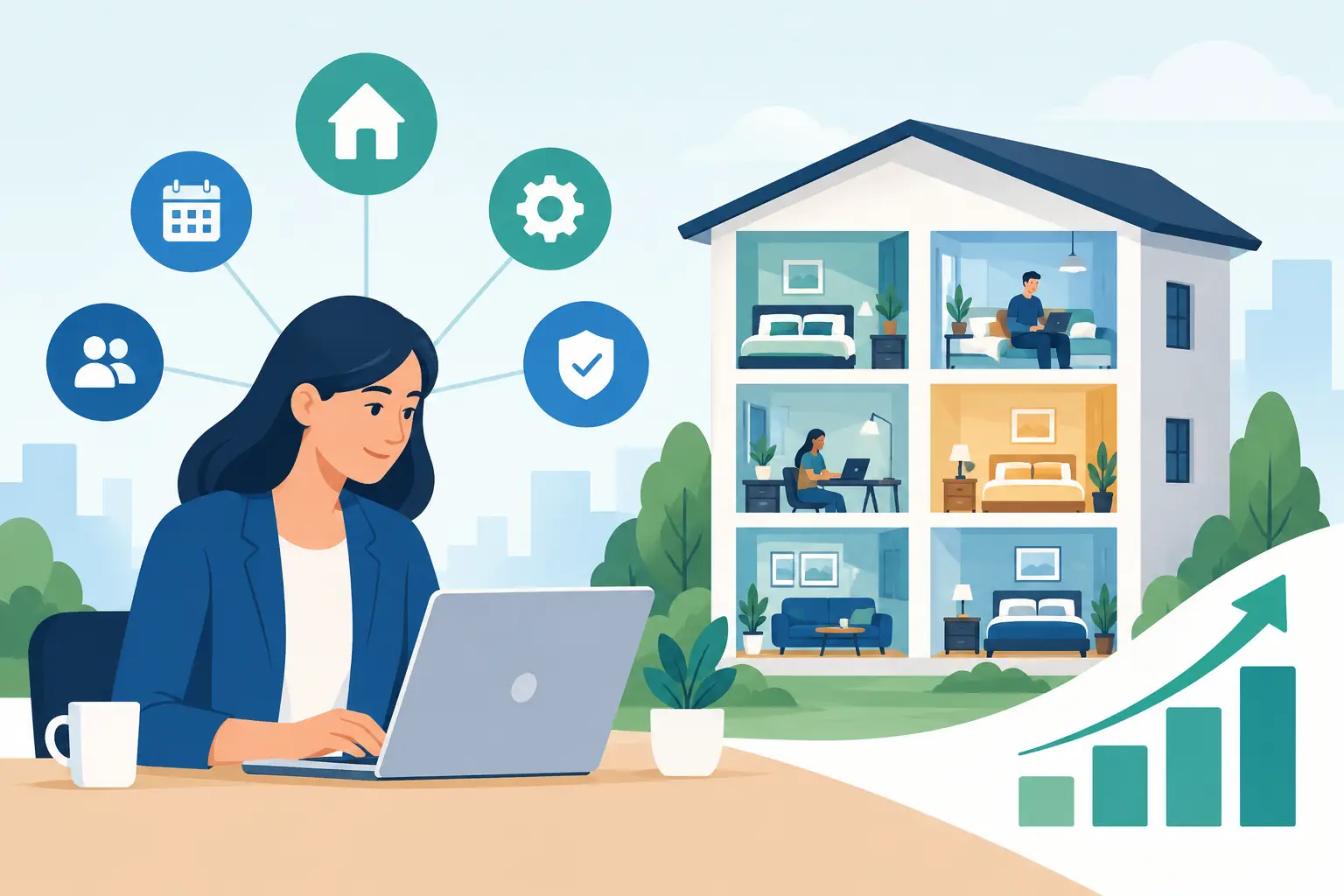
A five-bedroom house can produce more management work than several conventional rentals. That is the reality of room rental property management: you are not simply managing a property. You are managing five individual rent obligations, five move-in experiences, shared spaces, rotating responsibilities, and the occasional mystery bag of trash that somehow misses the bin.
The income potential can be compelling. The operating model can be exhausting without the right system. The difference is not whether you are a good landlord. It is whether your process is built for a household of unrelated adults sharing one home.
Why room-by-room rentals need a different system
Traditional property management is usually organized around one lease, one household, and one primary point of contact. A room rental home creates a different set of moving parts. Each roommate may have a separate payment schedule, move-in date, communication preference, and level of involvement in household responsibilities.
That means small tasks multiply quickly. One late payment requires a reminder. A new roommate needs an inspection and house expectations. A clogged sink needs someone to report it, someone to coordinate access, and a record of what happened. Chores need to be visible enough that nobody can honestly say, “I thought someone else was doing it.”
A group text may work when you have one shared house and plenty of spare time. It becomes unreliable when you add a second property, then a third. Important details disappear under messages about packages, visitors, and whose food is taking up the entire refrigerator shelf.
The goal is not to make shared living rigid or impersonal. It is to make expectations clear before you have to repeat them.
Start with repeatable roommate operations
The most effective room-rental operators do not rely on memory. They create a standard operating rhythm for every house, then use it consistently. This protects your time, creates a better roommate experience, and makes growth less chaotic.
Put rent reminders on a schedule
Manually texting roommates about rent is one of the fastest ways to turn a rental portfolio into a daily follow-up job. It also puts the landlord in an awkward position: you are sending the same reminder repeatedly while trying to stay professional and fair.
Automated reminders create a better default. Roommates receive notice before rent is due and, if necessary, after a missed payment. The system handles the routine communication while you step in only when a situation actually needs your attention.
Automation does not eliminate late rent. A roommate may have a genuine financial issue, a banking delay, or a simple mistake. But it prevents missed communication from becoming part of the problem. Everyone gets the same clear reminder, on the same schedule, without you having to chase anyone.
Make chores visible and fair
Shared homes run better when responsibility is specific. “Please keep common areas clean” sounds reasonable, but it does not answer the questions that create friction: Who takes the trash out this week? Who cleans the bathroom? Was the task completed? When does the rotation change?
A chore system should assign work, rotate it fairly, and give roommates a simple way to mark it complete. That is especially useful in homes where roommates do not know each other well or where turnover is common.
Avoid over-managing every household detail. Not every house needs a detailed checklist for wiping kitchen counters. But recurring tasks that affect everyone, such as trash, bathrooms, common-area cleaning, and yard upkeep, benefit from clear ownership. If a task is shared by everyone, it is often completed by no one.
Keep household communication in one place
Roommates need a way to receive house reminders and raise practical issues without turning the landlord into a 24-hour group-chat moderator. The key is separating useful property communication from casual household conversation.
Use one consistent place for reminders, task updates, and property-related notices. This makes it easier for roommates to find what they need and easier for you to confirm that a message was sent. It also reduces the familiar scramble of searching old text threads for a move-in photo, a maintenance detail, or the date you asked everyone to clear the hallway.
Communication should be direct, brief, and neutral. “Trash pickup is tomorrow. Please move bins to the curb by 8 p.m.” works better than a vague reminder asking people to be more responsible. Clear instructions reduce defensiveness and produce better follow-through.
Treat move-ins and move-outs as documentation events
A room turns over more often than an entire house. That makes consistent inspections one of the most valuable habits in room rental property management.
At move-in, document the condition of the bedroom and the relevant shared areas. Record existing marks, damage, fixtures, furniture, keys, and any other details that could become unclear later. Have a process that is easy enough to complete every time, not just when you remember.
At move-out, repeat the process. Compare the documented condition, record what changed, and note cleaning or repair needs before the next roommate arrives. This is not about assuming the worst of people. It is about avoiding avoidable disputes when memories differ months later.
Photos, checklists, and date-stamped records are far more useful than a verbal recollection of what the room looked like. They also make your operation look professional to roommates, who want to know that standards are applied fairly.
The trade-off is time upfront. A thorough inspection takes longer than handing over a key and hoping for the best. But a consistent process can prevent hours of back-and-forth over a damaged wall, missing key, or stained carpet.
Use dashboards to manage the house, not the drama
As your portfolio grows, the problem is rarely a lack of information. It is information scattered across texts, spreadsheets, calendar notes, photos, and your own memory.
You need a quick view of what requires attention: upcoming rent, overdue payments, open tasks, scheduled inspections, and household reminders. A good dashboard is not about adding more software to your day. It is about reducing the number of places you need to check before you know whether a house is running normally.
Cohabi is built around this shared-house reality. Instead of treating roommates as entries under one conventional lease, it helps landlords organize rent reminders, rotating chores, household tasks, inspections, documentation, and communication in one mobile-first place.
That matters because scaling rent-by-room housing is not only about acquiring more doors. It is about being able to operate more rooms without adding the same amount of manual work. If every new roommate adds more texts, more reminders, and more scattered records, growth starts to feel like another full-time job.
Set standards without becoming the house parent
There is a fine line between running an organized property and trying to control every aspect of roommates' lives. Your job is to set property standards, create clear processes, and respond when something needs landlord involvement. It is not to settle every disagreement about dishes, guests, or thermostat preferences.
The best systems create accountability before conflict escalates. When chores are assigned, reminders are visible, and responsibilities are documented, roommates have fewer reasons to feel singled out. They can see what is expected and what has been completed.
That does not mean every issue will disappear. Shared living involves different habits, schedules, and personalities. But a clear operating system keeps ordinary friction from becoming your emergency.
Build a process that handles the predictable parts of shared housing consistently. Then save your time for the decisions only a landlord can make.