Guide
Room Rental Software Built for Shared Homes
Room rental software helps landlords automate reminders, chores, inspections, and communication so shared homes run with less chasing and more clarity.
Irving Barajas · October 21, 2026
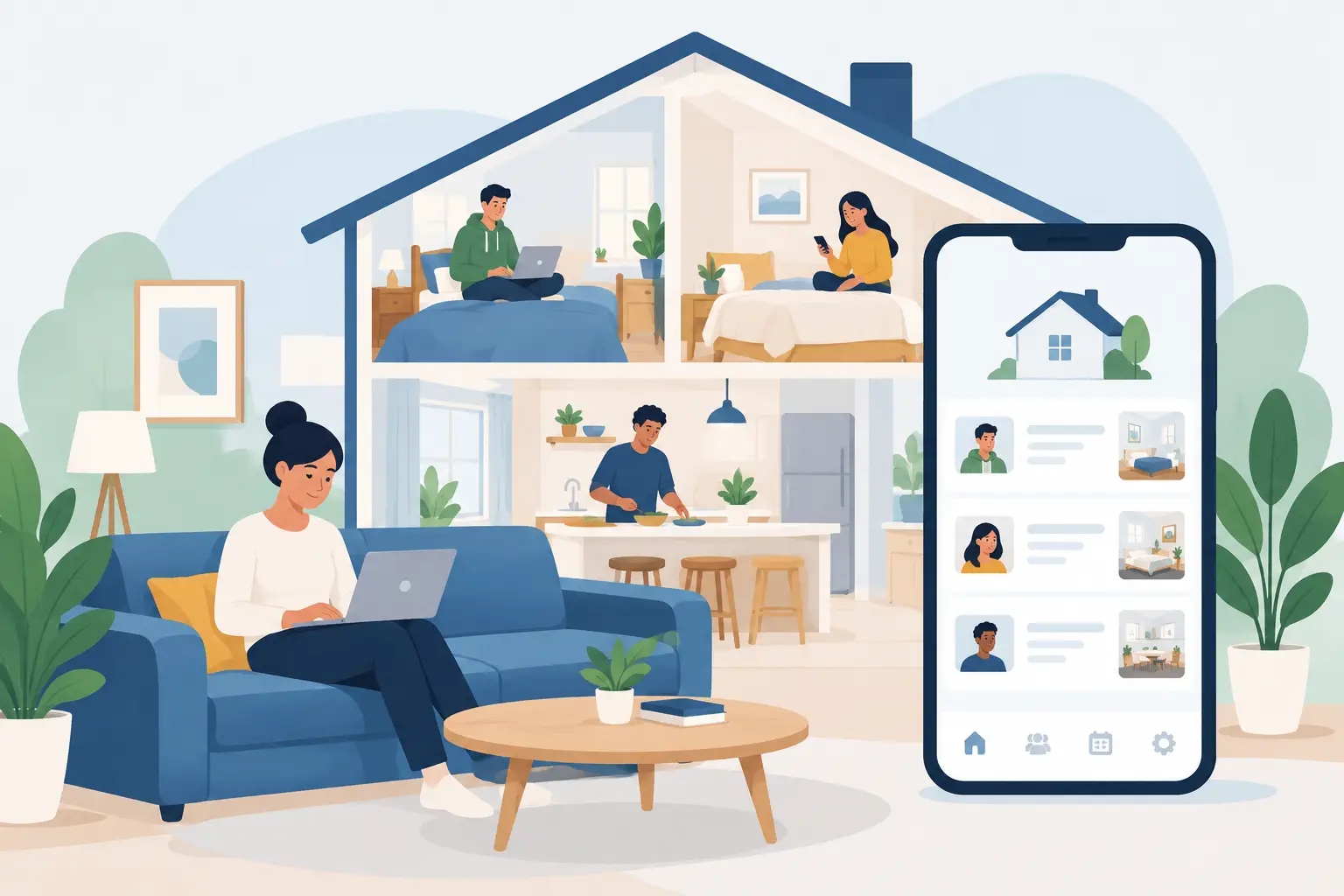
A shared house can look calm from the curb while creating a dozen small management jobs inside. Rent is due at different times. Someone needs to take out the trash. A roommate says a bedroom wall was already marked at move-in. Another person moves out Friday, and you need photos before the next resident arrives.
That is why room rental software needs to do more than store leases and tenant names. When you rent by the room, you are not managing one household with one decision-maker. You are managing several individual residents who share a property, common spaces, responsibilities, and plenty of opportunities for crossed wires.
The right system turns those repeated follow-ups into a clear operating process. Less time searching old texts. Less awkward rent chasing. Fewer debates about who was supposed to handle the kitchen.
Why regular property software falls short
Traditional property management software is usually built around a simple model: one unit, one lease, one tenant or family. That works well for a conventional apartment rental. It gets less useful when five unrelated adults live in one house.
A rent-by-room property has different day-to-day needs. Each roommate may have a separate agreement, a separate move-in date, and a separate relationship with the landlord. At the same time, they all affect the condition and rhythm of the same shared home.
A standard system may track who occupies a unit, but it often does not help answer the questions that actually fill a landlord's phone on a Tuesday afternoon: Who is assigned to the trash this week? Did anyone complete the task? Was that damage documented before the newest roommate moved in? Did everyone receive the same house reminder?
The result is usually a patchwork: a spreadsheet for occupants, a group chat for house updates, calendar alerts for rent, paper checklists for inspections, and personal notes for everything else. None of these tools is terrible on its own. Together, they create work that does not scale.
What room rental software should actually handle
Good room rental software is not about adding more screens or turning a small portfolio into a corporate office. It is about putting recurring shared-house work in one place, with clear ownership and a repeatable process.
Rent reminders without the monthly chase
Most landlords do not mind one friendly reminder. The problem is repeating it for every roommate, every month, across every property. It takes time, and it can make the landlord feel like the household's personal alarm clock.
Automated rent reminders create consistency. Roommates know when rent is approaching without waiting for a personal text. The landlord does not have to remember who has been contacted and who has not.
This will not eliminate every late payment. No software can solve a roommate's cash flow problem. But it does remove the avoidable communication gap and gives residents a predictable reminder process. That matters even more as you add rooms.
Chores with a visible owner
Shared-house chores are rarely difficult. The hard part is ambiguity.
If four people use the kitchen, nobody should have to guess whose turn it is to take out the trash or clean the common bathroom. A rotating chore schedule gives each task an owner and a due date. Task completion tracking then makes it clear whether the job was handled, rather than leaving everyone to interpret a silent group chat.
There is a practical limit here. Software cannot make someone care about cleaning. But it can make expectations fair, visible, and much harder to misunderstand. That often prevents small frustrations from becoming roommate conflict that lands back in your inbox.
Household communication that does not disappear
Important updates get buried fast in a text thread. A reminder about a plumbing visit, a note about trash pickup, or a request to keep the entry clear can vanish under memes, replies, and unrelated messages.
A shared-house communication space keeps property information where roommates can find it. It also makes the message feel like a household standard, not one roommate trying to police another. That distinction helps landlords stay organized without becoming the referee for every minor disagreement.
Move-in and move-out documentation
Inspections are one of the least exciting parts of managing a room rental. They are also one of the most valuable when a disagreement comes up later.
A consistent move-in inspection documents room condition before a resident settles in. A move-out inspection creates a matching record when that resident leaves. Photos, notes, and completed checklists give you a clearer picture of what changed and when.
This is not about assuming the worst of roommates. It is about protecting everyone from fuzzy memories. If a tenant believes a scuff was already there, a dated inspection record is more useful than trying to reconstruct the situation six months later.
The real payoff is repeatability
Managing one shared house with texts and a few notes can feel manageable. Managing three houses that way starts to feel like a part-time customer service job. Managing ten can consume evenings and weekends if every process depends on you remembering the next follow-up.
The goal is not to remove the human side of property management. Shared homes still need responsive landlords and reasonable communication. The goal is to stop using your own attention as the system.
When reminders, inspections, household tasks, and updates follow the same process at every property, you can see what needs attention without manually checking every conversation. Your residents also get a more professional experience. They know where to look, what is expected, and how to confirm that something is done.
That consistency is what makes a portfolio easier to grow. You are not just adding doors or bedrooms. You are adding a working operating system for each house.
How to choose the right room rental software
Before adopting a platform, start with the friction that costs you the most time. If late rent follow-up dominates your month, look closely at reminder workflows. If shared-space issues create the most noise, prioritize chores, tasks, and household communication. If turnovers are where problems pile up, inspections and property-condition documentation deserve more weight.
Then consider whether the software treats roommates as active participants. A system built only for landlord records will still leave you relaying every update manually. Roommates should be able to see relevant reminders, receive task assignments, complete tasks, and participate in inspections from a simple mobile experience.
Ease of use matters more than a long feature list. If you need a training manual to assign a trash rotation, the system is probably working too hard. The best tool should fit into the actual rhythm of running shared homes: check what needs attention, send or schedule the right reminder, document the property, and move on with your day.
It is also worth looking for flexibility. A house hack with two roommates does not need the same level of process as a co-living operator with multiple properties. The software should support your current setup without forcing you into complicated workflows you will never use, while still giving you room to grow.
A better way to run a shared house
Cohabi is built around the reality that rent-by-room properties need different systems than conventional rentals. Instead of treating the home as a single unit with a list of tenants, it helps landlords organize the shared household itself: rent reminders, rotating chores, task tracking, inspections, property documentation, and roommate communication.
That means fewer loose ends across apps and fewer moments where you wonder whether someone received the message or completed the task. It also gives roommates a clearer, fairer way to participate in the house. They are not passive names in a database. They know what is expected and can see what is happening.
For self-managing landlords, that is the point. You should be able to manage the house without spending every spare hour managing roommate logistics.
A well-run shared home does not require constant checking in. It requires clear expectations, consistent follow-through, and a system that keeps small responsibilities from turning into your next late-night text thread.