Guide
Roommate Chore Schedule Template That Works
Use a roommate chore schedule template to assign fair rotating tasks, reduce follow-ups, and keep shared rental homes clean and accountable every week with fewer texts.
Irving Barajas · August 17, 2026
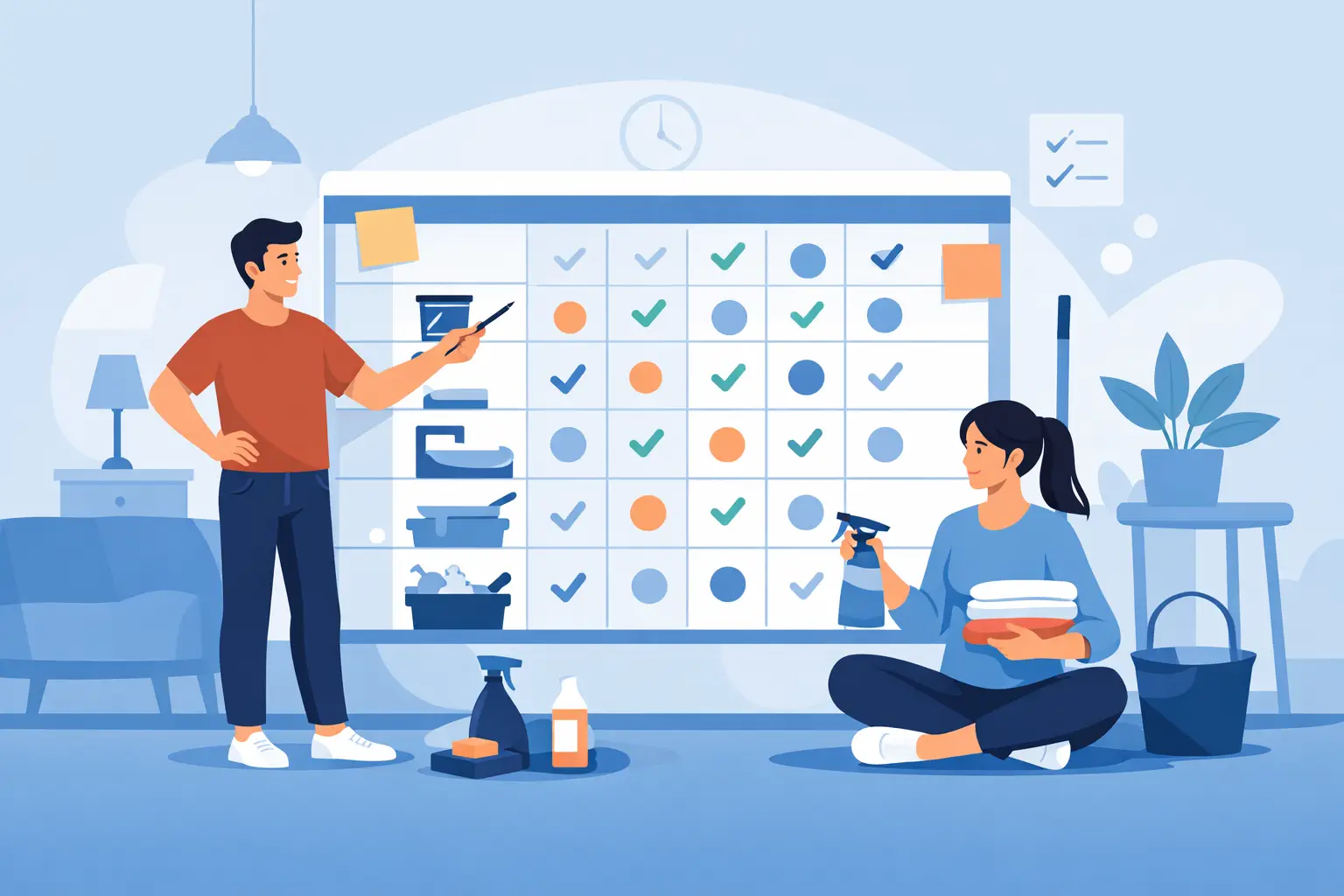
A dirty kitchen is rarely just about a dirty kitchen. In a shared rental, it can quickly become a string of group-chat messages, passive frustration, and a landlord wondering why they are mediating trash duty between adults. A clear roommate chore schedule template gives every resident one answer to the question that causes most of the conflict: who is responsible for this?
For rent-by-room landlords and co-living operators, chores are not a small household detail. They affect property condition, roommate satisfaction, move-out cleanliness, and how much time you spend checking in. The right system makes expectations visible, rotates the less desirable jobs fairly, and creates a simple record of what was assigned and completed.
Why shared houses need a chore system
Traditional rentals can leave household cleaning entirely to one leaseholder. Rent-by-room properties work differently. Several unrelated people share kitchens, bathrooms, halls, and outdoor areas, often with different schedules and different definitions of "clean enough."
Without a written system, the most conscientious roommate usually picks up the slack. That works until it does not. The person who regularly takes out the trash starts to feel taken advantage of, another roommate says they did not know it was their turn, and the house gets messier between landlord visits.
A good schedule removes the ambiguity before it becomes an argument. It should state the task, the assigned roommate, how often it happens, and what "done" means. It should also be easy to find. If the schedule lives in a text from six weeks ago, it is not really a system.
What to include in a roommate chore schedule template
Keep the template practical. The goal is not to create a 40-line cleaning manual that nobody reads. Focus on the shared areas and recurring tasks that protect the home and affect everyone living there.
Start with the task, frequency, assignment method, due day, and completion status. For recurring work, a weekly rotation is usually the easiest model. A roommate should not own bathroom cleaning forever just because they moved in first.
Use a monthly assignment for jobs that do not need weekly attention, such as wiping down the refrigerator shelves, cleaning the oven, or sweeping the front porch. For high-use homes with five or more roommates, bathroom and kitchen checks may need to happen twice a week. It depends on the size of the house, number of bathrooms, and whether residents cook at home often.
Here is a simple roommate chore schedule template for a four-person shared house:
| Task | Frequency | Week 1 | Week 2 | Week 3 | Week 4 | | --- | --- | --- | --- | --- | --- | | Take trash and recycling out | Weekly | Roommate A | Roommate B | Roommate C | Roommate D | | Clean kitchen counters and sink | Weekly | Roommate B | Roommate C | Roommate D | Roommate A | | Clean shared bathroom | Weekly | Roommate C | Roommate D | Roommate A | Roommate B | | Sweep or vacuum common areas | Weekly | Roommate D | Roommate A | Roommate B | Roommate C | | Check fridge for expired food | Weekly | Roommate A | Roommate B | Roommate C | Roommate D |
At the end of the fourth week, continue the same rotation. This approach is predictable, easy to explain during move-in, and fair over time.
Define what completion means
"Clean the bathroom" means different things to different people. Avoid that problem with one short standard next to each task. For example, bathroom cleaning may include wiping the sink and counter, cleaning the toilet, removing hair from the drain, replacing the trash bag, and mopping the floor.
The standard does not need to be fussy. It simply needs to be clear enough that roommates can complete the task without asking for instructions and landlords can spot an unfinished job without debating what was intended.
For trash duty, define whether the roommate is responsible for taking bins to the curb, bringing them back in, replacing liners, or all three. Small details are where shared-house systems tend to fail.
Set the schedule up before conflict starts
The best time to introduce chores is at move-in, not after the first complaint. Include the house chore expectations in your roommate welcome process and make sure every new resident knows where assignments will appear.
A few ground rules make the template easier to enforce. Chores should be completed by a consistent day and time, such as Sunday evening. Roommates should mark a task complete once finished. If someone will be away, they are responsible for swapping with another roommate before the due date, not after the kitchen is already a mess.
Landlords should also set a reasonable escalation path. A missed task can trigger a reminder. Repeated misses may lead to a documented warning or a charge if the lease and local rules support it. The point is not to punish people over one forgotten trash bag. It is to prevent the same avoidable issue from becoming the landlord's weekly problem.
Avoid the common chore schedule mistakes
A chore rotation can create more work if it is overly complicated. Assigning three different people to clean separate sections of one countertop, for example, is not accountability. It is an invitation to confusion.
Do not assign chores based only on which roommate seems the most responsible. That may keep the house clean for a month, but it breeds resentment and often causes your best residents to leave first. Rotate shared tasks unless there is a voluntary, documented agreement to handle responsibilities differently.
Also, separate individual messes from household chores. A schedule can cover cleaning the shared bathroom. It should not excuse someone from washing their own dishes, clearing food from the counter, or picking up personal belongings in the living room. Put that expectation in the house rules: clean up after yourself immediately, then complete the rotating chores on schedule.
Finally, do not make the landlord the completion tracker for every small job. If you manage several homes, manually checking off every task defeats the purpose of having a process. Residents need a way to see assignments, receive reminders, and confirm completion themselves.
Make accountability visible without hovering
A paper chart on the refrigerator can work in one small house with stable roommates. It is visible and costs nothing. But paper does not send reminders, it disappears during kitchen cleaning, and it does not help when you manage multiple properties.
A spreadsheet is a step up, especially for a house with detail-oriented residents. The trade-off is that someone still has to update it, remind people to check it, and sort out whether a checkbox reflects actual completion. Group chats are even less reliable. Important instructions get buried between memes, package notifications, and "whose car is blocking the driveway?"
For operators, a shared-house platform is usually the more repeatable option. Cohabi lets landlords assign rotating chores, send household reminders, and track task completion in the same place used for roommate communication and property operations. Instead of sending the same follow-up text every Sunday, the system makes the assignment and the due date visible to the person responsible.
That does not mean software replaces good house rules. It gives those rules a place to live and a process for carrying them out. The landlord stays informed without becoming the household's full-time chore captain.
Adjust the template as the house changes
A schedule should be consistent, but it should not be frozen forever. Review it after the first month and after any major occupancy change. If the bathroom is still not staying clean, the issue may be frequency rather than roommate effort. If trash is overflowing, the house may need an additional midweek pickup or a larger bin.
Ask roommates for useful feedback, but keep the final system simple. A fair schedule is not one that perfectly matches every resident's preferences. It is one that is clear, balanced, and applied consistently.
When responsibilities are visible, roommates spend less time guessing and landlords spend less time chasing. That is the real value of a roommate chore schedule template: a cleaner house, fewer avoidable conversations, and one more part of your portfolio that can run without constant supervision.