Guide
How to Self Manage Rental Properties by the Room
Learn how to self manage rental properties by the room with simple systems for rent, chores, inspections, roommate communication, and growth across homes.
Irving Barajas · August 22, 2026
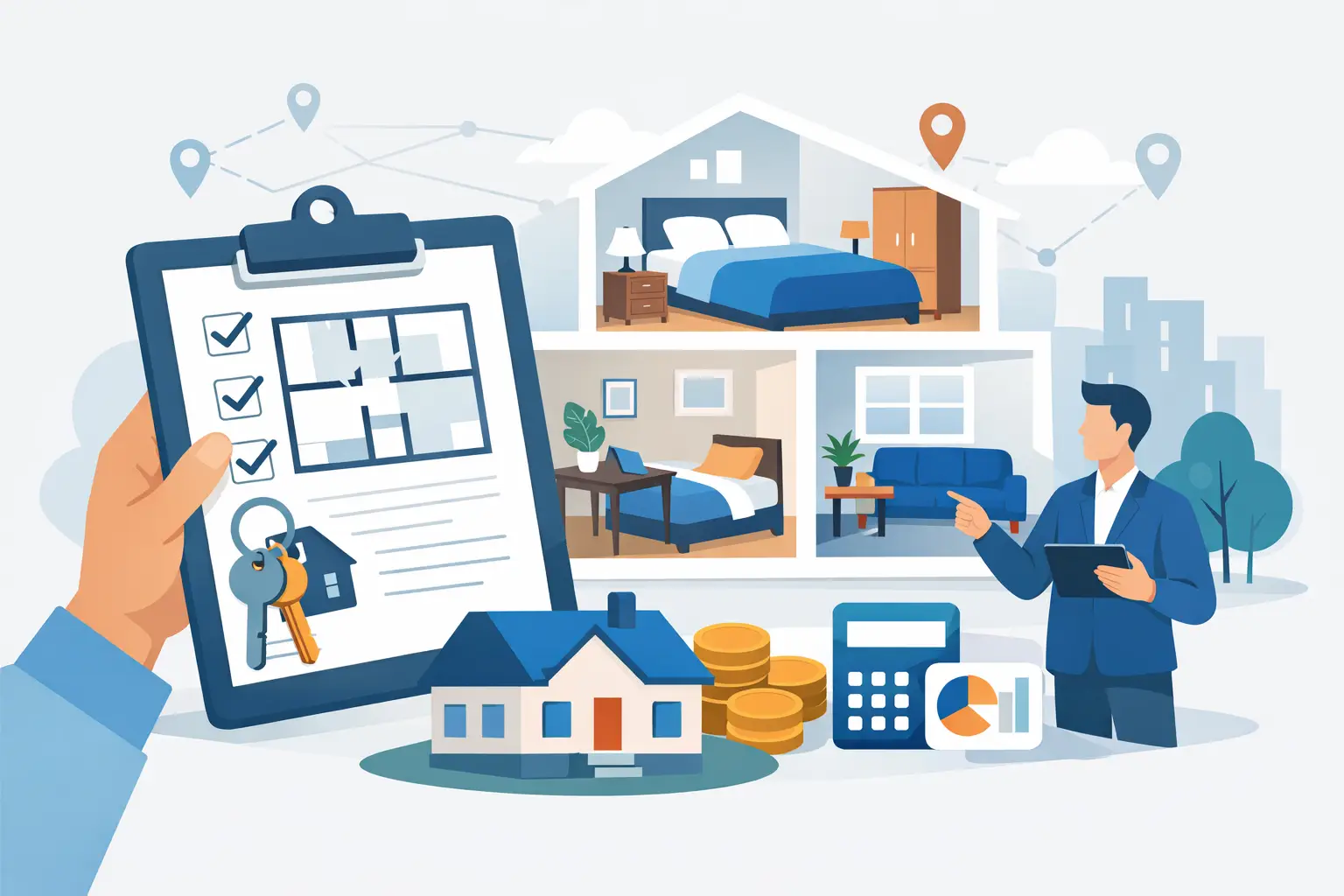
A rent-by-room house can look simple on paper: collect rent from a few people, keep the home in good shape, and handle issues as they come up. Then someone forgets rent, the trash is overflowing, two roommates disagree about cleaning the kitchen, and a move-out happens with no photos of the room condition. That is when self manage rental properties stops feeling passive.
The good news is that self-management does not have to mean being available for every question, reminder, and household problem. For landlords renting by the room, the goal is not to personally manage every detail. The goal is to build a clear operating system that keeps the house moving when you are not checking your phone.
Why room-by-room rentals need a different system
A traditional rental usually has one leaseholder or one household. Communication is fairly direct: one rent payment, one point of contact, and one shared responsibility for the unit.
A shared house is different. You may have five separate roommates, five payment behaviors, five move-in dates, and five opinions about whose turn it was to clean the bathroom. A small issue can become a landlord issue simply because nobody knows who owns it.
That is why managing by text message alone gets messy fast. Important instructions disappear in a group chat. Rent reminders become inconsistent. You cannot easily confirm whether a task was completed or whether a bedroom had existing damage before a new roommate moved in.
Self-management works best when expectations, reminders, and documentation live in a repeatable process rather than in your memory.
Start with one source of truth
Before adding more doors or rooms, decide where each recurring part of your operation belongs. Your system should give both you and your roommates a clear answer to a basic question: where do I look?
For rent, roommates should know when payment is due, what happens when it is late, and where reminders will appear. For household responsibilities, they should be able to see who is assigned to what without asking the group. For property issues, they should know how to report a problem and what information to include.
This does not require a giant operations manual that nobody reads. It requires consistency. Use the same move-in checklist at every house. Use the same maintenance reporting process. Send the same rent communication on the same schedule. When a roommate joins a property mid-month, they should enter a system that already makes sense.
A shared-housing platform such as Cohabi can put those recurring workflows in one place, from rent reminders and household tasks to inspections and roommate communication. The real value is not adding another app. It is replacing scattered texts, paper checklists, and mental notes with a process people can actually follow.
Put rent follow-up on a schedule
Chasing rent is one of the fastest ways for a self-managed portfolio to eat up your evenings. The awkward part is not just asking for money. It is deciding when to remind someone, tracking who has responded, and repeating the same conversation across several rooms.
Create a standard cadence before rent is due. Send an upcoming reminder a few days ahead, then a due-date reminder, followed by a consistent late notice if payment is missed. Your lease and local laws should determine the exact language, grace periods, and notices, so confirm your process with a qualified local attorney or property professional.
The point is to remove improvisation. A roommate should not receive three friendly texts one month and a formal message the next because you happened to be busy. Consistent reminders are fairer to roommates and easier for you to administer.
Automation helps here, but it does not replace enforcement. If a roommate is late, follow the process stated in the agreement. Document communications and avoid making exceptions you cannot reasonably apply to everyone.
Make chores visible, specific, and rotating
“Please keep common areas clean” sounds reasonable until nobody has emptied the dishwasher for a week. Shared houses need more than a vague cleanliness rule. They need visible ownership.
Assign tasks by name, set a completion date, and rotate recurring responsibilities. Kitchen cleaning, trash, bathrooms, hallways, lawn care, and supply checks may all need different schedules. If four roommates share a house, nobody should have to remember whose turn it is to take the trash out.
Keep assignments realistic. One roommate may have a private bathroom while others share one. A home with a large yard has a different workload than a townhouse. The goal is not perfect equality on every task. It is a system that feels clear and reasonable enough that people will use it.
When a task is missed, avoid turning the group chat into a courtroom. Refer to the assignment, ask for completion by a specific time, and document repeated issues. Clear systems reduce conflict because the conversation is about the task, not competing memories.
Treat move-ins and move-outs like risk management
Many landlord disputes begin with a sentence like, “It was already like that when I moved in.” Without documentation, it becomes difficult to know what is true.
Use a consistent move-in inspection for every room and shared area. Photograph walls, floors, windows, furniture, appliances, locks, smoke detectors, and any existing damage. Date the records and give the roommate an opportunity to review the condition. If the property is furnished, document the condition and quantity of each provided item as well.
At move-out, repeat the same inspection. Compare the photos and notes against the original record, then follow your state and local requirements for security deposit accounting, deadlines, and notices. Do not rely on a quick walk-through and good intentions.
This process protects the property, but it also protects good roommates. A fair roommate should not be blamed for old damage left by someone else. Professional documentation makes expectations clearer for everyone.
Create boundaries for communication
Self-managing does not mean answering non-urgent messages at midnight. Your communication process should tell roommates what counts as an emergency, how to report routine maintenance, and when they can expect a response.
For example, active flooding, a gas smell, no heat during dangerous weather, or a security issue should have an emergency route. A dripping faucet, burnt-out common-area bulb, or loose cabinet handle can go through the regular maintenance process with photos and a short description.
This separation matters. When every issue arrives as an urgent text, you lose the ability to prioritize. When routine issues are documented, you can see patterns, schedule vendors more efficiently, and show that requests are being addressed.
Keep household announcements in a shared, visible place too. Parking updates, planned inspections, contractor visits, trash-day changes, and seasonal reminders should not depend on one roommate remembering to relay the message.
Review the house before problems become expensive
A shared home gets more wear than a single-family rental occupied by one household. More people means more showers, more cooking, more keys, more deliveries, and more chances for a small maintenance issue to become a larger repair.
Set a regular cadence for property reviews. This could include checking smoke and carbon monoxide detectors, looking for leaks under sinks, inspecting common-area cleanliness, confirming exterior conditions, and noting wear before turnover. Provide proper notice and follow applicable entry laws before entering an occupied home.
Use the review to spot operational friction, not just damage. Is the trash area always overflowing? Are roommates repeatedly unclear about parking? Does one bathroom create most of the complaints? Those patterns tell you where the house rules or setup need adjustment.
Know when self-management is still the right choice
You can self-manage a growing portfolio if your systems grow with it. The warning sign is not necessarily a certain number of rooms. It is whether routine work still depends on you remembering every detail.
If you are personally sending every reminder, hunting through texts for inspection photos, and mediating every chore disagreement, adding more rooms will likely add more stress. If rent communication, tasks, documentation, and household updates follow a consistent process, you can handle more without turning the business into a second full-time job.
Some owners will still choose outside help for leasing, maintenance coordination, or after-hours emergencies. That can make sense based on location, portfolio size, and available time. But a traditional property manager may not solve the roommate-level friction inside a shared house. You still need a system built around individual residents and shared spaces.
The best self-managed properties are not the ones where the landlord is constantly involved. They are the ones where roommates know what is expected, the property condition is documented, and routine issues have a clear next step. Build that structure now, and your next room should feel like growth, not another phone you need to answer.