Guide
Tenant Portal Software Built for Shared Homes
Tenant portal software helps room-by-room landlords automate rent reminders, chores, inspections, and household communication without chasing roommates.
Irving Barajas · October 11, 2026
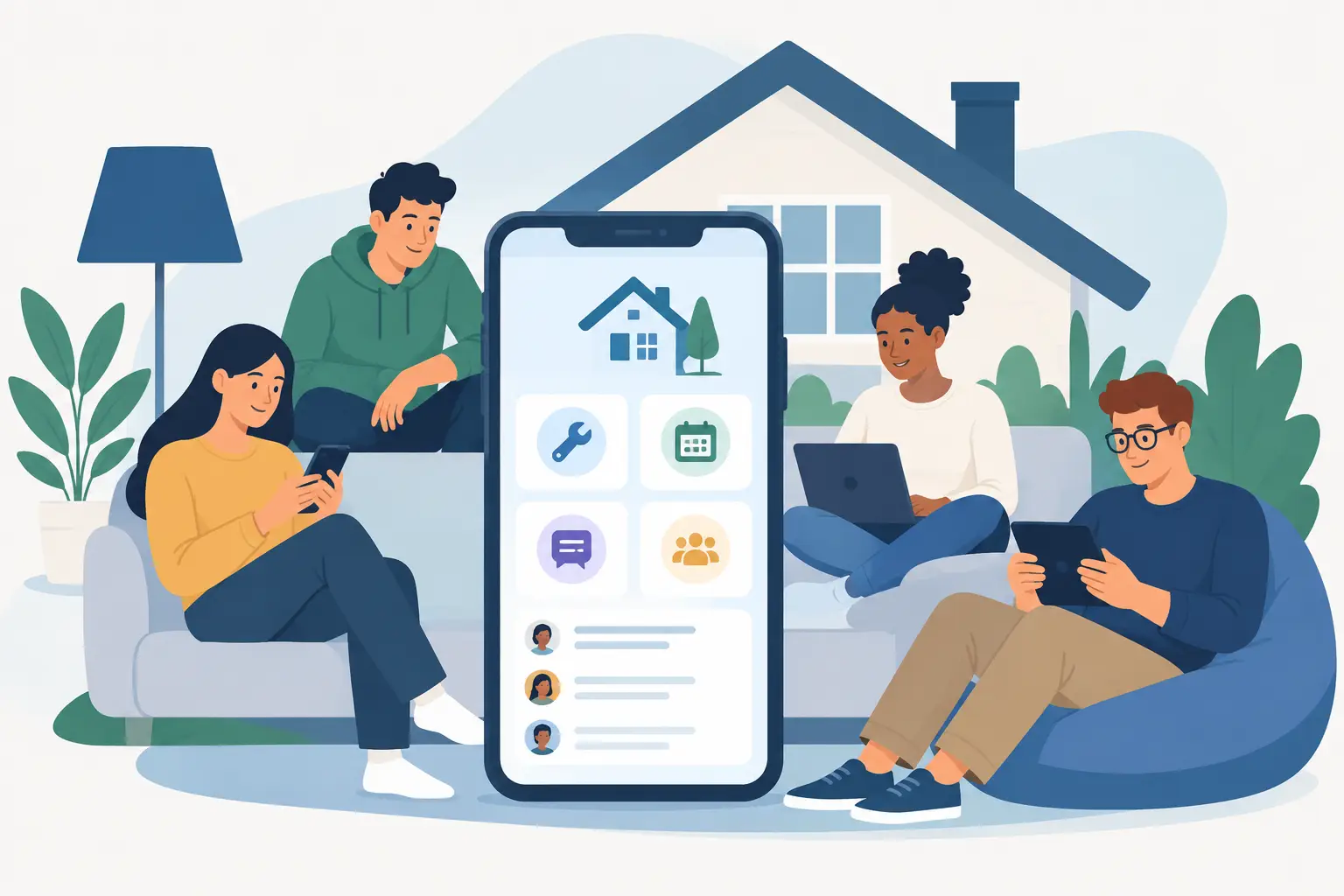
A rent-by-room house can look simple on paper: one property, several bedrooms, several rent payments. In practice, it is a small shared operation with individual people, individual responsibilities, and plenty of opportunities for a group chat to become a black hole. Tenant portal software gives landlords one place to organize the repeatable work that keeps a shared home running.
For a traditional rental, a portal may mostly mean rent payments and maintenance requests. That is useful, but it is not enough for a house with five unrelated adults sharing a kitchen, bathroom, trash cans, and expectations. Shared housing needs a system that helps the landlord manage both the property and the household.
Why Shared Homes Need Different Tenant Portal Software
A whole-unit rental usually has one leaseholder or one household acting as a unit. When rent is late, there may be one conversation. When a repair is needed, the tenants generally sort out who reports it. When the lease ends, the move-out process applies to one household.
Room-by-room rentals work differently. Each roommate has a separate relationship with the property, and the home itself has shared responsibilities. One person may pay on time while another needs a reminder. Someone may report a clogged sink, while nobody knows whose turn it was to take the trash out. At move-out, you need to know what condition that specific room was in, not just whether the house was generally clean.
That does not mean roommates need to be micromanaged. It means the expectations need to be visible, consistent, and easy to follow. The right system replaces repeated follow-up with a process people can see.
What a Tenant Portal Should Handle in a Shared House
The best portal for a shared rental is not the one with the longest feature list. It is the one that removes the daily work you should not have to do manually. Before choosing a platform, start with the moments that create the most texts, confusion, and avoidable back-and-forth.
Rent reminders without the awkward chase
Late rent is frustrating enough. Having to send the same reminder to multiple roommates every month makes it worse. Manual follow-up also creates inconsistency. You may remember to text one person early, then get busy and contact another two days later.
Automated rent reminders create a fairer process. Every roommate receives the same prompt on the same schedule, so rent does not depend on whether the landlord had time to open a group chat that morning. The outcome is not that nobody will ever pay late. It is that you spend less time playing collections coordinator for routine payments.
For landlords with a handful of rooms, this saves time immediately. For operators with several homes, it is one of the systems that prevents growth from turning into another full-time job.
Chores and household tasks with clear ownership
Shared homes do not fail because people cannot understand a chore chart. They fail because the chart is buried on a fridge, the assignments are unclear, or everyone assumes somebody else handled it.
A portal should make responsibilities visible. If four roommates share a house, nobody should have to remember whose turn it is to take out the trash. Rotating chores, one-time tasks, due dates, and completion tracking provide a simple answer to the most common household question: who is responsible for this?
That clarity helps everyone. Roommates know what is expected without feeling singled out in a public text thread. Landlords can see whether a task was completed before following up. And if something is missed, the conversation is about a documented assignment, not a vague accusation that the house is getting messy.
Not every shared house needs a detailed task calendar. A quiet three-bedroom house with experienced tenants may only need basic reminders. A larger co-living home with frequent turnover may need rotating chores and regular household tasks. The portal should fit the level of structure your property actually needs.
Household communication that does not disappear
Group chats are fast, but they are terrible filing systems. A roommate posts a useful message about parking, package deliveries, or a plumbing issue. Two days later, it is buried under memes, reactions, and unrelated plans for Saturday night.
Tenant portal software gives household communication a more reliable home. Use it for reminders that need to be found later: trash day changes, planned maintenance, inspection notices, shared-space rules, or a quick note about an upcoming move-in.
The goal is not to ban roommates from texting each other. People will still use group chats, and that is fine. The goal is to stop treating a group chat as your operating system.
Move-in and move-out documentation
Property condition disputes often begin with a weak process, not bad intentions. If a room was not documented at move-in, it is much harder to sort out whether a stain, dent, missing key, or damaged blind existed before a roommate arrived.
A good portal supports consistent inspections with photos, notes, and checklists. The same process should happen for every room, every time. That protects the property, creates a more professional experience for roommates, and gives you a record when questions come up later.
This matters even more in room rentals because turnover may happen one bedroom at a time. You cannot wait for an entire house to vacate before resetting the property. You need a repeatable process for the individual room while keeping the rest of the household moving.
How to Choose the Right Platform
Start by looking at how your operation works today. If your current system includes text threads, a spreadsheet, calendar alerts, paper inspection forms, and your memory, you do not need more apps. You need fewer places to check.
First, make sure the platform is built for individual roommates, not just entire units. Can each person receive relevant reminders? Can you assign tasks to a specific roommate? Can you manage room-level move-ins and move-outs? If the system only sees one property and one tenant record, it may force your shared-house operation into the wrong structure.
Next, look for a mobile-first roommate experience. A portal only helps when people actually use it. Roommates should be able to check a task, see a reminder, review an inspection, or receive a household update without training or a long login process. Complicated software usually sends everyone back to texting you.
Finally, consider how much administrative work the platform removes. Some property management software is packed with accounting tools, leasing workflows, and enterprise reporting. Those tools can be valuable for a larger conventional portfolio. But for a self-managing room-by-room landlord, complexity can become its own burden. Choose the system that handles your real pain points well, rather than paying for a dashboard full of features you will not use.
A Better Setup Starts with Clear Rules
Software cannot fix unclear house rules. It can make clear rules much easier to run.
Before inviting roommates into a portal, decide what should be standardized across every property. Set the rent reminder schedule. Define which chores rotate and which tasks are one-off. Create a basic move-in inspection checklist. Decide where official household updates will live. Keep the process simple enough that you will use it every time.
Then introduce the system as a benefit, not a surveillance tool. Explain that it gives roommates clear assignments, fewer surprise reminders, and an easy place to find important household information. Most people appreciate knowing exactly what is expected of them. They just do not want to hunt through old messages to find it.
Cohabi is designed around that reality: the shared household is not an afterthought. It is the day-to-day operation landlords are actually managing.
The Payoff Is Less Follow-Up, Not More Software
A tenant portal should not add another tab to babysit. It should reduce the number of times you have to ask whether rent was paid, who handled the trash, whether a task was completed, or what condition a room was in before move-in.
The best result is not a house that feels overly controlled. It is a house where expectations are clear, routine communication happens without your constant involvement, and roommates have a simple way to do their part. Put the repetitive work into a system, and save your attention for the decisions that actually need a landlord.