Guide
What Is Normal Wear Damage in Rental Homes?
What is normal wear damage? Learn how landlords can separate aging from tenant-caused damage, document condition, and handle deposits fairly at move-out.
Irving Barajas · September 23, 2026
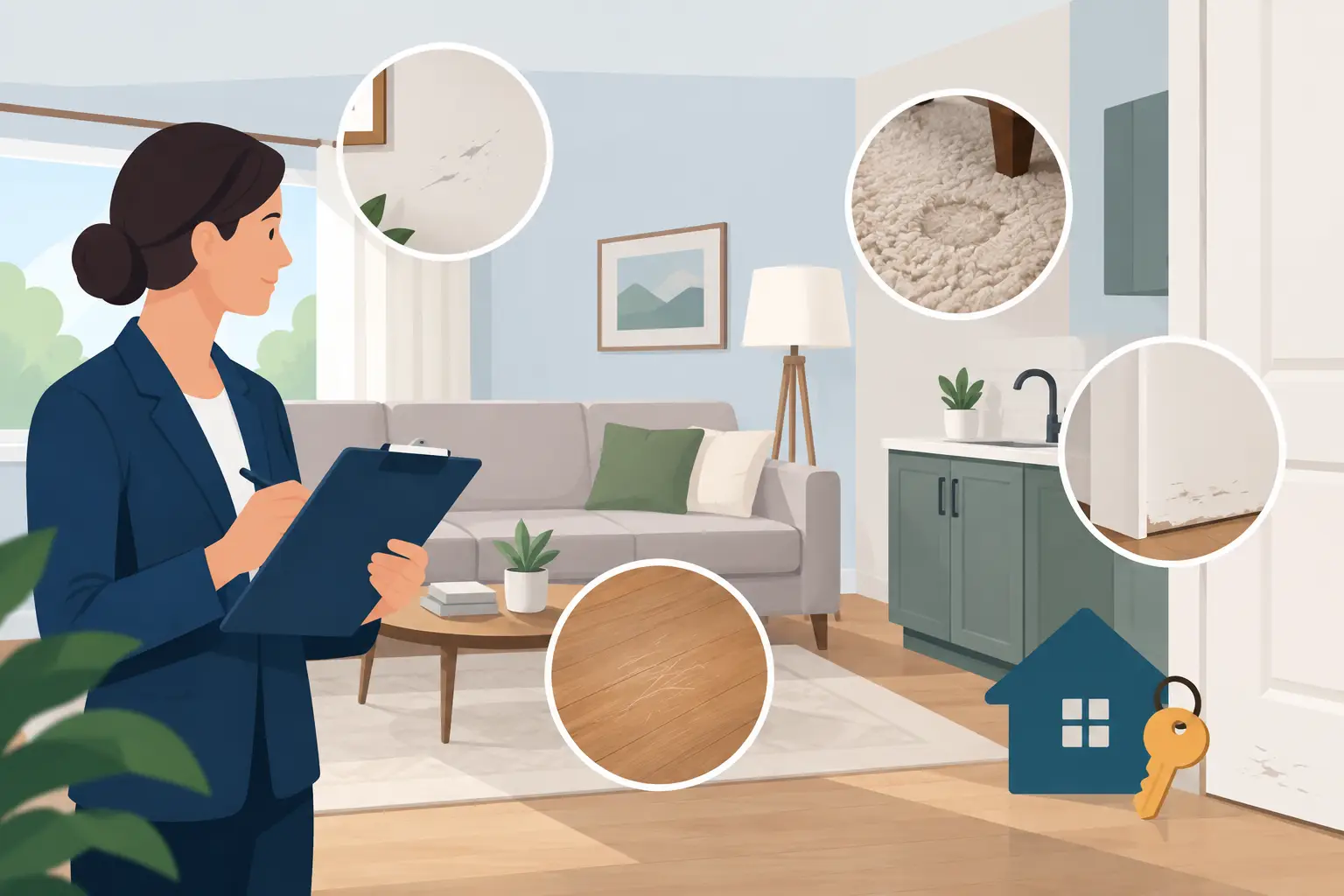
A bedroom carpet that looks slightly flatter after two years is not the same as a carpet with iron burns, pet stains, or large bleach spots. Yet at move-out, both can get labeled as “damage” unless the landlord has a clear standard. So, what is normal wear damage? In rental housing, the more common term is normal wear and tear: the gradual, expected decline in a home's condition from ordinary use.
For rent-by-room landlords, this distinction matters even more. Several unrelated adults may use the same kitchen, bathroom, hallways, and appliances every day. Things will age faster in shared homes. That does not automatically make every worn surface a chargeable expense.
What Is Normal Wear Damage, Exactly?
Normal wear and tear is deterioration that happens even when a roommate uses the property responsibly. Paint can fade. Carpet can become matted in high-traffic areas. Blinds can loosen over time. A refrigerator shelf may show light scuffs from years of groceries coming in and out.
Normal wear is about age, expected use, and useful life. It is not caused by carelessness, abuse, neglect, or an avoidable accident.
Tenant-caused damage is different. It is harm that goes beyond ordinary living and requires repair or replacement before the item would otherwise need it. A fist-sized hole in drywall, broken window, unauthorized paint color, missing keys, or a clogged toilet caused by inappropriate items are common examples.
The line is not always perfectly sharp. A small nail hole from hanging a picture may be treated as ordinary use in one situation, while dozens of large anchor holes can justify a repair charge. State and local rules, lease terms, the length of occupancy, and the specific facts all matter.
A practical test for landlords
Ask three questions before deciding whether to charge a departing roommate:
- Would this item need repair or replacement soon because of age and ordinary use anyway?
- Is the condition materially worse than it was at move-in, accounting for how long the roommate lived there?
- Do inspection photos and notes clearly support the difference?
If the answer to the first question is yes, be cautious about charging. If the answer to the second and third questions is yes, you may have a stronger damage claim. The goal is not to make the home look brand new at the roommate's expense. It is to recover legitimate costs when someone leaves the property in worse condition than normal occupancy would cause.
Normal Wear and Tear vs. Tenant Damage
A few real-world examples make the distinction easier.
Faded paint, minor scuffs near light switches, and small marks from furniture are usually normal wear, especially after a longer tenancy. Large crayon drawings, deep gouges, cigarette burns, or holes in the wall are more likely damage.
A carpet that is worn down in the path between a bedroom door and closet may simply be at the end of its useful life. A fresh red-wine stain, pet urine odor, or melted area from a curling iron is not ordinary aging.
In bathrooms, lightly discolored caulk or grout that needs refreshing can be routine maintenance. A cracked sink from a dropped object or mold caused by a roommate ignoring a persistent leak may be a different conversation. Be careful with mold, though. The source matters. If ventilation is poor or a plumbing issue went unaddressed, the owner may bear responsibility.
Appliances create similar gray areas. An older dishwasher that stops working because a part has worn out is generally a landlord expense. A dishwasher damaged because someone repeatedly used the wrong detergent or forced broken items into the racks may be chargeable if you can document what happened.
Shared Houses Need a Different Standard of Documentation
In a traditional one-family rental, it may be easier to connect a damaged area to a single household. In a shared house, a hallway wall, kitchen cabinet, or common bathroom is used by multiple people. By the time someone moves out, the question is often not “Is this damage?” but “Who caused it?”
That is why vague notes and old text messages are not enough. A shared-housing operator needs a repeatable record of the property's condition, room by room and common area by common area.
Start before move-in. Take dated photos and video of each bedroom, bathroom, kitchen, living area, appliance, fixture, floor, wall, and exterior area relevant to the lease. Record existing wear honestly. If the bedroom carpet already has a stain, note it. If a cabinet door is slightly loose, note that too. You cannot fairly charge a roommate for a problem they inherited.
At move-out, use the same inspection structure. Capture wide shots for context and close-ups for details. Describe the issue in plain language: “Two-inch hole in east bedroom wall near closet,” not “wall damaged.” A clear record protects both sides and makes deposit decisions much easier to explain.
Cohabi helps landlords keep move-in and move-out inspections and property condition documentation in one organized place, rather than buried in a camera roll or scattered across group chats.
Document common areas throughout the tenancy
Do not wait until the last roommate leaves to inspect common spaces. Kitchens and bathrooms take the most abuse in room-by-room rentals, and a problem can become impossible to assign months later.
When you notice a new issue, document it promptly and communicate with the household. A quick message such as, “The pantry door was intact during last week's inspection and is now off its hinges. Please let me know what happened by Friday,” is more effective than raising a mystery charge at move-out.
This is not about playing detective over every scratch. It is about setting the expectation that shared spaces are shared responsibilities. Prompt documentation also gives roommates a fair chance to explain, fix, or report an issue before it grows.
Security Deposits Are Not a Refresh Budget
A common landlord mistake is treating the security deposit as a fund for turning over a room. Cleaning, repainting, and replacing aging items are often part of operating a rental. Whether you can deduct those costs depends on the condition, applicable law, and whether the roommate caused damage beyond normal wear.
You also generally cannot charge the full cost of a brand-new replacement when the damaged item was already near the end of its useful life. If a six-year-old carpet has a limited remaining life, a roommate who causes damage may owe a reasonable depreciated amount, not the full price of new flooring for the entire house.
This is where receipts, maintenance history, and move-in records matter. Keep track of when you painted, installed flooring, purchased appliances, or replaced fixtures. Without that history, it is harder to make a fair calculation and harder to defend one if challenged.
Deposit deadlines and itemized-statement requirements vary by state, and sometimes by city. Follow the rules that apply to your property. A lease clause does not override local law just because it says “tenant pays for all repairs.”
Build a Process That Prevents Move-Out Arguments
Most deposit disputes start long before move-out. They start when expectations are unclear, maintenance requests get lost, and nobody knows what the room looked like on day one.
Give each roommate a move-in inspection they can review and add to within a defined period. Explain how to report maintenance issues, especially leaks, appliance problems, and damage in common areas. Encourage early reporting. A roommate who reports a water leak quickly may save you thousands, even if the repair is inconvenient.
Then keep the process consistent. Use the same inspection categories across every house, take photos in the same places, and apply the same standard to comparable conditions. Consistency reduces the feeling that a charge is personal or arbitrary.
For shared spaces, your lease should clearly explain collective responsibility and how unassigned common-area damage will be handled where state law permits. Still, collective language is not a substitute for evidence. The better your records, the less often you will need to rely on broad, frustrating assumptions.
A well-run move-out is not about finding deductions. It is about having a clean, defensible record and treating roommates fairly. When the standard is clear from move-in, the final inspection becomes a straightforward business conversation instead of one more round of group-chat chaos.