Guide
When Should Landlords Photograph Damage at a Rental?
When should landlords photograph damage? Learn the inspection moments, photo standards, and shared-house records that prevent deposit disputes later on.
Irving Barajas · October 29, 2026
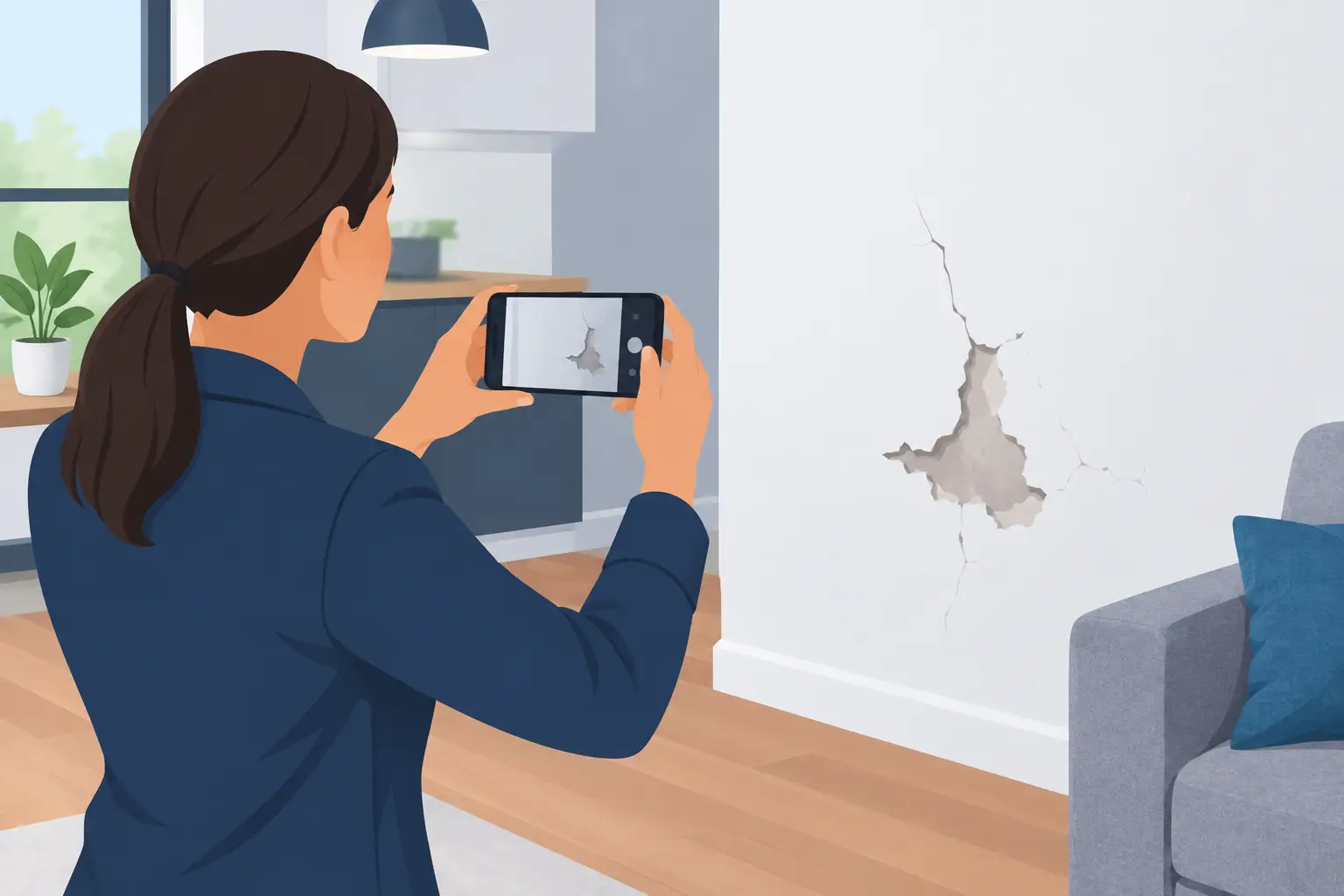
A roommate says the bedroom wall was already scuffed. Another says the broken shelf was there when they moved in. Six months later, everyone remembers the story differently. That is exactly when should landlords photograph damage becomes more than a paperwork question. It is how you protect the property, treat roommates fairly, and avoid turning a $75 repair into a long deposit argument.
For rent-by-room landlords, documentation needs to be more consistent than it might be in a traditional single-family lease. People move in and out on different dates, share kitchens and bathrooms, and may have very different ideas about who caused a problem. Photos give you a neutral record. The goal is not to catch someone out. It is to create clear expectations before the story gets fuzzy.
When Should Landlords Photograph Damage?
The short answer: at move-in, at move-out, when new damage is reported or discovered, and after repairs are complete. Each moment answers a different question.
Move-in photos show the starting condition of a room and its shared spaces. Move-out photos show the condition when a roommate returns possession. Mid-tenancy photos document an issue while it is fresh, before cleaning, repairs, or more wear make the cause harder to determine. Repair-completion photos show that you addressed the problem and restored the property.
If you only photograph damage at move-out, you are already operating from a weak position. You may be able to show a stain, hole, or broken fixture exists, but not whether it was pre-existing, normal wear, or caused by the departing roommate. A clean move-in record is what makes later documentation useful.
Photograph before a new roommate moves in
Take photos after the prior turnover is complete and before the new roommate brings in a single box. This is the most valuable inspection in the whole resident lifecycle.
Photograph the bedroom from multiple angles, including walls, flooring, windows, closet interiors, doors, trim, smoke detectors, blinds, and any furnished items. Then document the condition of shared areas the roommate is entitled to use: kitchen appliances, cabinets, counters, bathrooms, hallways, laundry areas, outdoor spaces, and common furniture.
In a shared house, this does not mean you need a separate 400-photo album for every roommate. Create a property-level record for common areas at the beginning of a lease period, then a room-specific record for each bedroom. If one roommate moves in while four others stay, document their room and any common-area issues that already exist at that time.
Photos work best alongside a written inspection. A photo of a scratched floor is useful. A note saying “two surface scratches near bedroom door, present at move-in” makes it far harder for anyone to misread later.
Photograph immediately when damage is reported
A leaking toilet, cracked window, pet damage, water stain, or damaged appliance should be documented as soon as it is safe to do so. Do not wait until the next routine inspection or the end of the lease.
First, deal with the urgent issue. Stop active water leaks, address safety hazards, and arrange emergency repairs when needed. Then photograph the damage before cleanup or repair changes the evidence. If a roommate reports the issue by text, ask them to submit clear photos too, but do not rely on their images alone when the repair cost could be meaningful.
Timing matters with water damage in particular. A small stain on a ceiling can become a much larger repair if the source is not found quickly. Photos taken when the issue is first discovered can help show the progression, support an insurance claim if one applies, and explain why a repair was necessary.
Photograph at routine inspections, with proper notice
Periodic inspections help you catch problems before they become expensive. They also give you an updated condition record between move-in and move-out. The right schedule depends on your lease terms, local law, property condition, and how hands-on you want to be, but many shared-house operators use inspections at predictable intervals.
Give any notice required by state and local law and by the lease. Respect privacy. The purpose is to inspect the property, not to document a roommate’s personal belongings. Focus photos on fixtures, surfaces, appliances, safety concerns, and damage. Avoid photographing private papers, medication, personal photos, or anything unrelated to the property condition.
Routine inspections are especially useful in high-turnover room rentals. One roommate may leave, another may arrive, and the house itself keeps operating. Regular records prevent the common-area condition from becoming a mystery no one can solve.
Photograph again at move-out
Conduct the move-out inspection as close as possible to the time the roommate fully vacates. Photograph the same areas you covered at move-in, using similar angles when practical. That makes comparisons fast and credible.
Capture both the full context and the close-up. If there is a hole in a wall, take one photo that shows where it is in the room and another that clearly shows its size and detail. For a damaged countertop, show the full counter, then the burn mark or chip. A close-up without context can be hard to identify later. A wide shot without detail may not prove the condition.
Do not confuse normal wear and tear with chargeable damage. Minor scuffs, faded paint, worn carpet in a high-traffic area, or small signs of ordinary use may be normal wear depending on the circumstances. A punched hole, unauthorized paint color, broken door, deep pet scratches, or missing fixture is a different conversation. Your state’s security-deposit rules control what may be deducted, so use photos as documentation, not as a substitute for knowing the law.
What Makes Damage Photos Useful?
A blurry photo taken in a dark room does not settle much. You do not need professional real estate photography, but you do need a repeatable process.
Use good lighting, keep images unedited, and take more than one angle for meaningful damage. Make sure the date is preserved through your inspection system or original file information. Pair photos with short notes that identify the room, item, condition, date, and any action taken.
For example, “Bedroom 3, north wall beside closet, quarter-sized hole, discovered during move-out inspection on May 31” is much stronger than “wall damage.” If there is a known cause, document what was reported without assuming blame before you have the facts.
For significant issues, include a simple size reference when appropriate. A tape measure or ruler can clarify the scale of a crack, hole, or damaged flooring area. Just do not let documentation slow down an urgent repair.
Shared Spaces Need Their Own System
The kitchen is where shared-house documentation gets tricky. If five unrelated adults use the same refrigerator, who owns the dented door? If the shower rod is bent, when did it happen? If nobody documented the condition at the right times, the answer may be impossible to prove fairly.
Treat common areas as their own category. Record their condition at household move-in, during routine inspections, before and after any major turnover, and when damage is reported. If responsibility is unclear, avoid guessing. Review your records, ask for information, and apply the lease and house rules consistently.
This is also where organized software earns its keep. Instead of hunting through camera rolls, email threads, and group-chat photos, keep inspection records attached to the room or property. Cohabi helps landlords document move-ins and move-outs in one place, so property condition records do not disappear into someone’s phone after a busy turnover day.
A Simple Photo Process That Holds Up
The best process is one you will actually follow when you have three move-outs, two maintenance requests, and rent reminders going out at once. Use the same inspection checklist every time. Take photos in the same room order. Label records consistently. Ask roommates to review and acknowledge move-in condition records when your process allows it.
Keep original images and inspection notes for the period required by applicable law, and longer when there is an unresolved claim, dispute, or insurance matter. Do not alter photos to make damage look worse or cleaner than it was. Clear, ordinary documentation is more persuasive than dramatic documentation.
Most disputes are not caused by one missing photo. They are caused by an inconsistent process: no move-in record, a rushed move-out, unclear notes, and images scattered across devices. Put the condition record on a schedule, just like rent reminders and household tasks. When a question comes up months later, you will have facts instead of a memory contest.