Guide
Household Task Software for Shared Rentals
Household task software gives shared-housing landlords clear assignments, automatic reminders, and a better way to keep every house on track each week.
Irving Barajas · November 4, 2026
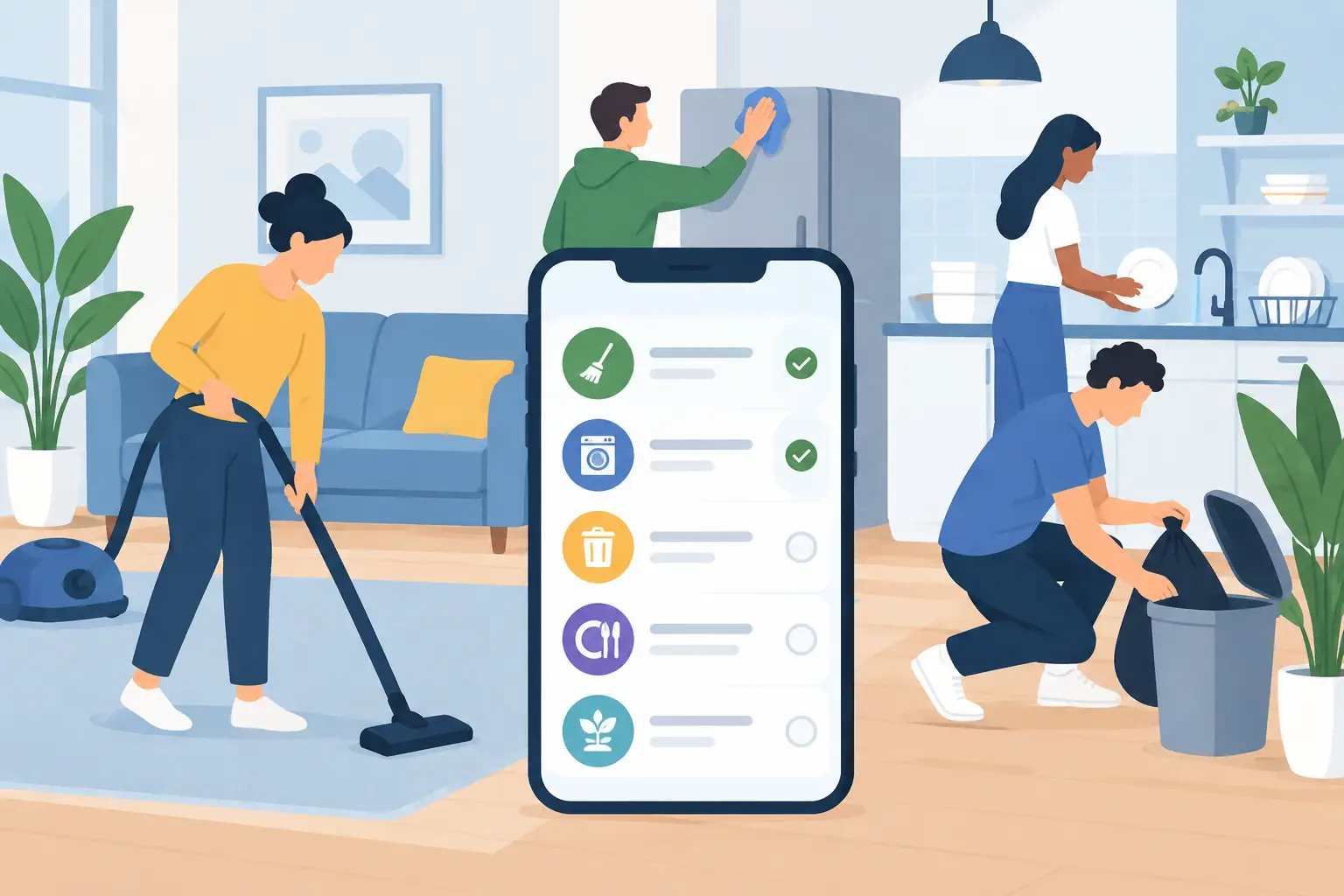
A shared house can run smoothly for weeks, then one full trash bin, an uncleaned bathroom, or a missed yard task turns into a landlord text thread nobody wants to be in. Household task software gives rent-by-room landlords a better system: clear assignments, recurring schedules, reminders, and a record of what was actually completed.
That matters because shared housing is not managed like a standard one-family rental. You are not coordinating with one household that privately decides who handles the dishes. You are managing several individual roommates who may have different schedules, expectations, and definitions of what “I’ll get to it later” means.
Why shared houses need household task software
The usual workaround is a group chat, a spreadsheet, or a chore chart taped to the refrigerator. Those methods can work in a small, unusually organized house. They tend to fall apart when someone moves out, a new roommate moves in, or the landlord manages more than one property.
The real problem is not that roommates are incapable of doing chores. It is that the system is often unclear. Someone assumes another person is taking out the trash. The bathroom is overdue for cleaning, but nobody knows whose week it is. A landlord notices the issue during a visit and becomes the person who has to sort it out.
That is a poor use of an owner-operator’s time. If you have six rooms across two homes, small follow-ups multiply quickly. If you have 30 rooms, they can become a part-time job.
Household task software turns informal expectations into a visible operating system for the home. Each person can see what they own, when it is due, and whether it has been marked complete. Instead of sending the same reminder again, you have a process that does the repetitive work for you.
What a useful task system should do
Not every task app is built for rental housing. A general productivity app may let people create to-do lists, but it usually does not understand a rotating roommate household, property-level oversight, or the need for landlord visibility.
For shared rentals, the system should make recurring work easy to assign and easy to verify. That includes routine items such as trash and recycling, bathroom cleaning, kitchen cleanup, lawn care, filter changes, or taking bins to the curb. It should also handle one-off tasks, such as clearing a blocked walkway after a storm or checking that a common-area window is closed.
The best setup has four practical qualities:
- Tasks are assigned to a specific roommate, not vaguely to “the house.”
- Rotating chores automatically move to the next person on schedule.
- Reminders reach people before a task becomes overdue.
- Completion is tracked so landlords do not have to guess whether the job happened.
These details sound simple because they are. The point is not to turn a shared home into a corporate workplace. The point is to remove the ambiguity that creates avoidable friction.
Clear ownership beats general reminders
“Can someone clean the bathroom?” is a request. “Jordan is assigned the upstairs bathroom this week” is a system.
General reminders invite diffusion of responsibility. Everyone sees the message, assumes someone else will respond, and the task stays unfinished. A named assignment is fairer to roommates, too. They do not have to defend themselves against a vague complaint when they know exactly what is expected and when.
For landlords, clear ownership changes the conversation. You are no longer policing the house. You are referring back to an agreed process.
Rotation keeps the workload fair
Some household duties are naturally recurring and shared. Trash duty, common-area cleaning, and snow clearing should not keep landing on the most conscientious roommate simply because that person notices first.
A rotating schedule distributes those tasks without requiring someone to rebuild a calendar every month. When a roommate moves out, the schedule can be adjusted rather than abandoned. When a new roommate joins, they can see the expectations from day one.
There is a trade-off here. Not every chore needs strict rotation. A roommate who has exclusive use of a private bathroom should generally be responsible for it. A common kitchen, on the other hand, may need a rotation or a defined shared-cleanup standard. The right system reflects how the house is actually used.
Set up tasks around the property, not your memory
Landlords often build task systems reactively. The bins were missed twice, so they add a bin reminder. The lawn gets overgrown, so they text someone about mowing. Over time, the house is managed through a collection of old messages and mental notes.
A better approach is to walk through each property and identify the work that keeps common areas functional, safe, and presentable. Start with the tasks that create the most conflict or require the most landlord follow-up. Those are usually the first candidates for automation.
For a typical shared house, that may mean a weekly kitchen reset, a bathroom cleaning rotation, trash and recycling days, and a monthly check of outdoor areas. Keep early task lists focused. If you assign too many vague chores, roommates will stop paying attention. If you assign a small number of clear, predictable responsibilities, completion becomes easier to maintain.
Write tasks in plain language. “Clean upstairs shared bathroom: wipe sink and counter, clean toilet, empty trash, mop floor” leaves far less room for interpretation than “bathroom chores.” A task does not need a novel-length checklist, but it should make a reasonable completion standard obvious.
Keep landlords informed without making them the chore captain
Visibility is useful. Micromanagement is not.
A landlord does not need to inspect every completed task or comment on every missed deadline. But you should be able to see patterns. Is one property repeatedly struggling with trash? Are common-area tasks falling behind during turnover? Is a particular roommate missing assignments while others stay current?
That information helps you respond proportionately. One missed chore may only need an automated reminder. A repeated pattern might call for a direct conversation, a review of house rules, or a change to the assignment schedule. The software should reduce unnecessary follow-up, not eliminate reasonable property oversight.
This is also where task tracking protects the roommate experience. When assignments and completions are visible, the loudest person in the group chat does not get to define the story. There is a shared record. That can lower tension before a minor issue becomes a roommate dispute.
Connect tasks to the rest of house operations
Chores do not exist in a vacuum. The same shared-house issues that cause missed tasks often show up in communication, maintenance reporting, rent reminders, and move-out condition disputes.
That is why a purpose-built platform is more useful than stitching together separate calendars, messaging apps, and spreadsheets. Cohabi brings household task assignments and rotating chores into the same operating flow as reminders, roommate communication, and property documentation. The result is less information buried in texts and fewer systems for you to check.
For example, a move-in is the right time to introduce task expectations, not three weeks later when the kitchen becomes a problem. A documented move-out can help clarify whether an issue is a routine cleaning miss or property damage that needs a different response. A household dashboard can show you where attention is needed before you make another unnecessary check-in.
The goal is not to automate every human conversation. Shared homes still need judgment, especially when roommates have legitimate concerns about fairness, health, accessibility, or a task that another resident cannot reasonably perform. The goal is to automate the predictable work so your attention is available for the exceptions.
A better shared-house experience starts with fewer reminders
Roommates generally do not want more landlord messages. Landlords definitely do not want to send them. A clear household task system gives both sides something better: expectations that are visible, schedules that feel fair, and reminders that arrive without someone having to chase the group.
When the house knows who is responsible, you can spend less time managing the trash, the bathroom, and the group-chat confusion - and more time managing a portfolio that is actually built to grow.