Guide
Rent Reminder Software Review for Room Rentals
This rent reminder software review shows room-by-room landlords what to look for, where tools fall short, and how to stop chasing rent each month easily.
Irving Barajas · November 10, 2026
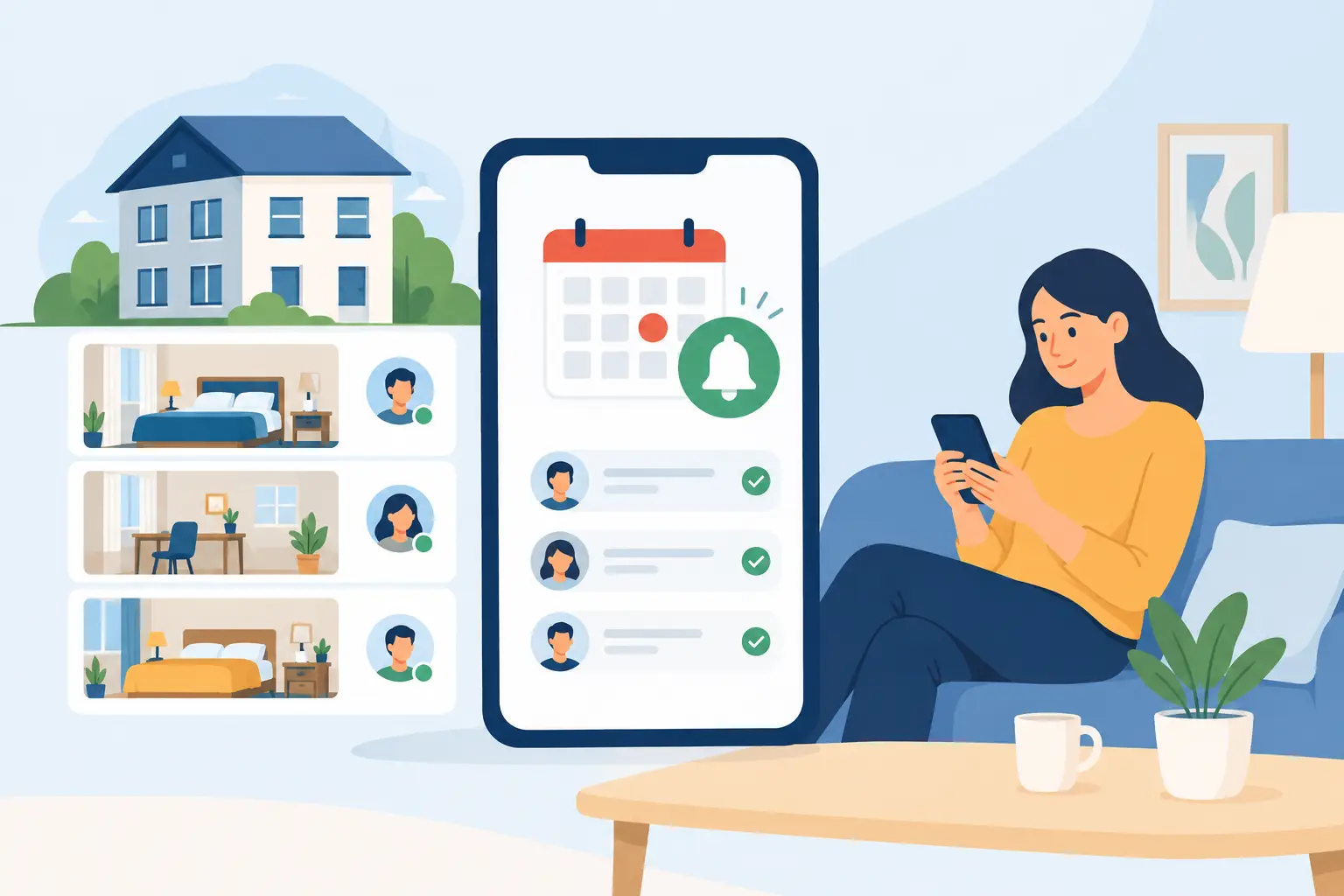
A rent reminder software review should answer one practical question: will this tool stop you from personally chasing five different roommates for five different payments every month?
For a landlord renting an entire home to one household, basic reminders may be enough. For a rent-by-room operator, the job is different. Each resident has their own due date, communication habits, lease timeline, and excuse for why they "thought rent was due tomorrow." The right system removes repetitive follow-up without making the house feel cold or overly complicated.
What Rent Reminder Software Should Actually Solve
A reminder tool is not useful just because it can send a message on the first of the month. Your phone can do that. The value is in creating a consistent process that works across every room, every house, and every month.
The best rent reminder software gives roommates notice before rent is due, follows up when payment is late, and keeps communication from depending on whether you remembered to send a text after dinner. That consistency matters. A friendly reminder sent automatically feels like a house policy. A reminder sent manually after you notice a missing payment can feel personal, even when it should not.
For room rentals, the software should also support the reality that roommates are individuals. One person may pay early, another may need a follow-up, and a third may have moved out last week. Systems built around a single leaseholder often make this harder than it needs to be.
The Core Test: Does It Work at the Roommate Level?
Many traditional property management platforms were designed for apartments and single-family rentals with one tenant record attached to one unit. They can be useful for accounting, marketing, or maintenance, but the roommate experience is often an afterthought.
That creates friction in a shared house. You may have one property address, but you are managing several separate resident relationships. If the system only lets you communicate with the household as one group, you still end up manually sorting out who has paid, who needs a nudge, and who should receive which message.
A strong option lets you organize residents by room while maintaining a clear view of the overall house. You should be able to see what is due, what has been communicated, and what still needs your attention without scrolling through old texts or updating a spreadsheet.
Timing matters more than most landlords expect
A single reminder on the due date is better than nothing, but it is not a complete process. Look for flexible scheduling that supports advance notice and follow-up reminders. Residents should have enough time to prepare, and late payers should receive a clear prompt without requiring you to restart the same awkward conversation each month.
The right cadence depends on your lease terms and resident base. A house with young professionals may only need a pre-due-date reminder and one late notice. A newer co-living operation may want more touchpoints while residents learn the process. Good software gives you control without turning setup into a project.
A Rent Reminder Software Review Needs to Look Beyond Texts
Text messages are fast, but they are not a system by themselves. They get buried between delivery notifications, work messages, and the household group chat debating who bought the oat milk. Emails can be missed too. What matters is that reminders are consistent, visible, and connected to the resident and property information you need.
When reviewing software, pay attention to whether reminders sit inside a broader operational workflow. Rent is only one recurring responsibility in a shared home. The same landlord who is following up on rent is often assigning chores, coordinating a move-in, documenting a damaged wall, and answering a question about trash pickup.
Using separate tools for every task may seem inexpensive at first. In practice, it creates more tabs, more duplicate information, and more opportunities for something to get lost. A shared-housing platform can make more sense when rent communication, household reminders, task assignments, and inspections need to work together.
Cohabi is built around that specific operating model. It gives rent-by-room landlords automated rent reminders alongside shared-house tools such as rotating chores, task tracking, roommate communication, and move-in and move-out inspections. The point is not to add another dashboard. It is to replace the manual follow-ups that pile up when several unrelated adults share one home.
What to Check Before You Commit
A polished demo can make nearly any platform look simple. Test the everyday situations that cause your current process to break down. Can you add a new roommate quickly? Can you remove a former roommate without affecting the rest of the household? Can you tell which residents have received reminders? Can you manage several houses without opening each property one at a time?
Also look closely at onboarding. Enterprise property management software may offer a long list of features, but that does not help if setting up one shared house requires a training course. Small landlords and house hackers need a system they can start using without building an operations department.
Your review should also include the resident side. Roommates are more likely to respond well when expectations are clear and communication is organized. They should not need to hunt through a confusing portal just to understand an upcoming rent reminder or complete a household task. A simple mobile experience helps turn reminders into routine rather than another source of friction.
Here are four practical questions worth asking during a trial:
- Can the platform treat each roommate as an individual while keeping the household organized?
- Can you automate reminders around your actual rent rules and due dates?
- Can you see communication and outstanding responsibilities without searching through texts?
- Does it also reduce the other repetitive work that comes with running a shared house?
If the answer is no to most of these, you may be buying a message sender rather than a management system.
Trade-Offs to Expect
There is no perfect tool for every portfolio. A basic reminder app may be enough if you own one house, have long-term roommates, and already have a reliable process for inspections and household communication. It will likely be cheaper and faster to set up.
The trade-off is that growth exposes the gaps. Once you add another property, replace a resident, or start spending too much time checking who received what, disconnected tools become expensive in a different way: they cost attention. And attention is usually the first thing self-managing landlords run out of.
On the other hand, a full-service property management platform can be excessive if its main purpose is handling large apartment portfolios, complex accounting, or conventional unit-based leasing. More features do not automatically mean a better fit. For room rentals, the useful feature is the one that helps you manage separate people living under the same roof.
The Best Choice Is the One You Will Stop Thinking About
Good rent reminder software should become boring in the best way. Reminders go out. Roommates know what is expected. You step in when there is a real exception, not because the monthly process depends on you remembering who to text.
Start by mapping one rent cycle at one house. Identify every manual message, every spreadsheet update, and every moment you check whether someone has paid. Then choose software that removes those repeat tasks while giving roommates a clearer, more professional experience. Your future self should be managing the property, not conducting a monthly scavenger hunt for rent.