Guide
Landlord Automation for Room-by-Room Rentals
Landlord automation helps room-by-room owners stop chasing rent, chores, and inspections, so shared houses stay organized as portfolios grow with ease.
Irving Barajas · October 15, 2026
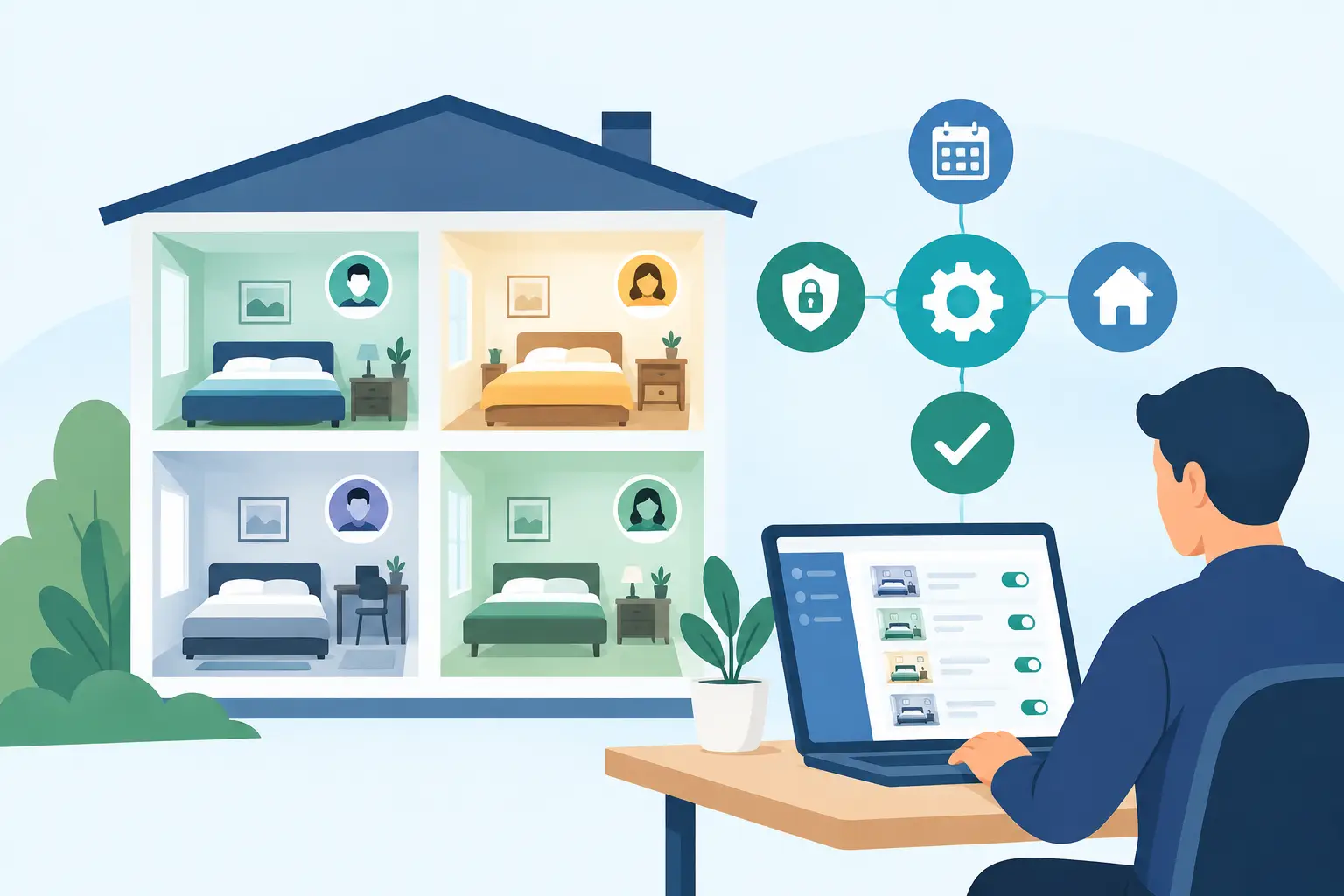
A shared house can run smoothly for weeks, then suddenly require six separate follow-ups: rent is late, the trash is overflowing, a roommate is moving out, and nobody can find the move-in photos. Landlord automation is how you stop being the person who has to remember, message, and chase every routine task.
For rent-by-room landlords, automation is not about making management impersonal. It is about making expectations clear before small issues become repeated texts, awkward reminders, or preventable disputes. When several unrelated adults share one home, the operational work is different from managing a single-family rental. Your systems need to account for individual roommates and the household they share.
What Landlord Automation Actually Means
Landlord automation means setting up repeatable actions that happen on schedule, based on a trigger, or through a consistent workflow. In a conventional rental, that may be a rent reminder and a lease renewal notice. In a shared house, it needs to cover more ground: each roommate's rent communication, rotating household chores, task assignments, inspections, and property updates.
The goal is not to automate every human interaction. A roommate with a genuine payment issue, a maintenance concern, or a conflict with another resident may need a real conversation. The point is to remove the repetitive work that does not need your personal attention every single time.
Think of it this way: if you have to type the same reminder more than once, there is probably a process worth automating.
Why Shared Homes Need Different Systems
A whole-unit landlord usually communicates with one leaseholder or one household. A room-by-room landlord may manage five individual renters under one roof, each with separate payment behavior, move dates, questions, and responsibilities. Meanwhile, the house has shared spaces that still need attention.
That creates a management gap. A spreadsheet may tell you who lives in each room, but it does not remind the kitchen group whose turn it is to clean the stove. A group chat may get everyone’s attention for a moment, but important updates quickly disappear under messages about a missing package or an unfamiliar mug in the sink.
The result is a familiar pattern: the most responsible roommates do extra work, the landlord becomes the referee, and routine house operations depend on whoever remembers to speak up first. That is not a sustainable system, especially when you add another property.
Automation gives the house a predictable rhythm. Everyone can see what is expected, when it is due, and whether it has been completed. That clarity is useful for roommates too. Fairness is much easier to maintain when responsibilities are visible instead of being negotiated in a text thread.
Start With the Repetitive Work That Eats Your Time
The best automation projects solve a specific recurring annoyance. Do not begin by trying to redesign your entire operation. Start with the processes that create the most follow-up.
Rent reminders should not depend on your memory
Late rent is stressful enough without manually drafting individual messages every month. Automated rent reminders keep upcoming due dates visible and create a consistent communication pattern for every roommate.
Consistency matters here. When reminders arrive only after you notice a payment is missing, they can feel reactive or personal. When they are scheduled as part of normal house operations, expectations are clearer. You still decide how to handle a missed payment, but you are not spending the first days of every month sending the same message five times.
This does not mean a reminder fixes every collection problem. Lease terms, payment methods, and follow-up procedures still matter. Automation simply ensures the first step happens reliably.
Chores need ownership, not another group-chat debate
Shared-house chores are a small operational task with a big effect on resident satisfaction. If four people share a kitchen, nobody should have to remember whose turn it is to take out the trash. And you should not have to mediate because one roommate believes they cleaned last time.
A rotating chore system assigns responsibilities on a regular schedule and shows who owns each task. Task completion tracking adds another layer of accountability. Instead of asking the whole house, “Can someone please clean the bathroom?” the expectation is already assigned.
Not every task should rotate. Some properties may use a professional cleaner for common areas, while roommates handle daily cleanup. Others may assign permanent duties based on the house setup. The right approach depends on your lease terms and resident expectations. What matters is that the system is explicit.
Move-in and move-out documentation protects everyone
Inspection workflows are one of the easiest places for landlords to lose time and evidence. At move-in, you are coordinating keys, room condition, common-area condition, and resident acknowledgments. At move-out, you need a reliable record of what changed.
A standardized digital inspection process creates a repeatable record with photos, notes, and timestamps. It helps you avoid searching through old camera rolls when a security deposit question comes up months later. It also gives roommates a clearer picture of the condition they accepted when they moved in.
Automation does not replace a careful inspection. It makes sure careful inspections happen the same way every time.
Household reminders keep the property from running on guesswork
Some messages are not urgent, but they still need to reach the house: a landscaper is coming, an inspection is scheduled, trash pickup changes for a holiday, or a contractor needs access to a common area. These details are easy to lose in texts and hard to repeat individually.
A central household communication channel keeps property updates separate from casual roommate conversations. The difference is simple but meaningful. Roommates know where to find operational information, and landlords have fewer reasons to resend the same announcement.
How to Build a Landlord Automation System That Works
Good automation starts with clear rules. If your current process is vague, automating it only sends vague instructions faster. Before selecting tools or workflows, decide what should happen, who owns it, and what occurs when it is not completed.
First, write down every task you repeat in a typical month. Include rent reminders, chore rotations, common-area checks, maintenance updates, move-in steps, and move-out steps. Then separate tasks into three categories: scheduled tasks, trigger-based tasks, and human decisions.
Scheduled tasks happen at predictable intervals. Rent reminders and chore rotations are common examples. Trigger-based tasks begin when something changes, such as a new roommate signing, a resident giving notice, or an inspection being scheduled. Human decisions require judgment, such as approving a payment arrangement or addressing repeated lease violations.
That third category is important. Automation should free up time for judgment, not pretend judgment is unnecessary.
Next, standardize the message and the owner. A reminder should say what is due, when it is due, and what the resident needs to do. A household task should name the responsible roommate and show when completion is expected. Avoid messages that require people to guess whether they are being asked to act.
Finally, use one system that roommates can actually use. A complicated enterprise platform may create more work if residents never open it. Cohabi is built around the room-by-room reality: rent reminders, household tasks, chore assignments, inspections, and communication in one mobile-first place. The value is not more software. It is fewer disconnected systems to manage.
Where Automation Can Go Wrong
Automation works best when it supports a well-run house rather than replacing basic communication. Sending too many reminders can train roommates to ignore them. Keep notifications useful, timely, and tied to a clear action.
You also need room for exceptions. A roommate who is moving out early, recovering from an emergency, or reporting a legitimate maintenance issue should not receive a tone-deaf automated response with no path to contact you. Build a process for escalation and make it clear how residents should use it.
Privacy and fairness matter too. Household communication should be transparent without turning every roommate issue into a public announcement. A chore status can be visible to the house. A payment issue usually should not be. The best workflows create accountability while respecting individual relationships.
The Payoff Is More Than Time Saved
When your shared houses have clear, repeatable operations, you spend less time acting as a reminder service. Rent communication becomes consistent. Chores have an owner. Move-in and move-out records are easier to find. Roommates get a more organized living experience, which can reduce the friction that leads to turnover and complaints.
More importantly, your workload stops growing one text at a time. Adding rooms will always add responsibility, but it does not have to add the same amount of administrative chaos.
Start with one recurring headache this week. Put a clear process around it, make the expectation visible, and let the system do the reminding. Your next shared house will benefit from the work you do now, and so will your weekends.